


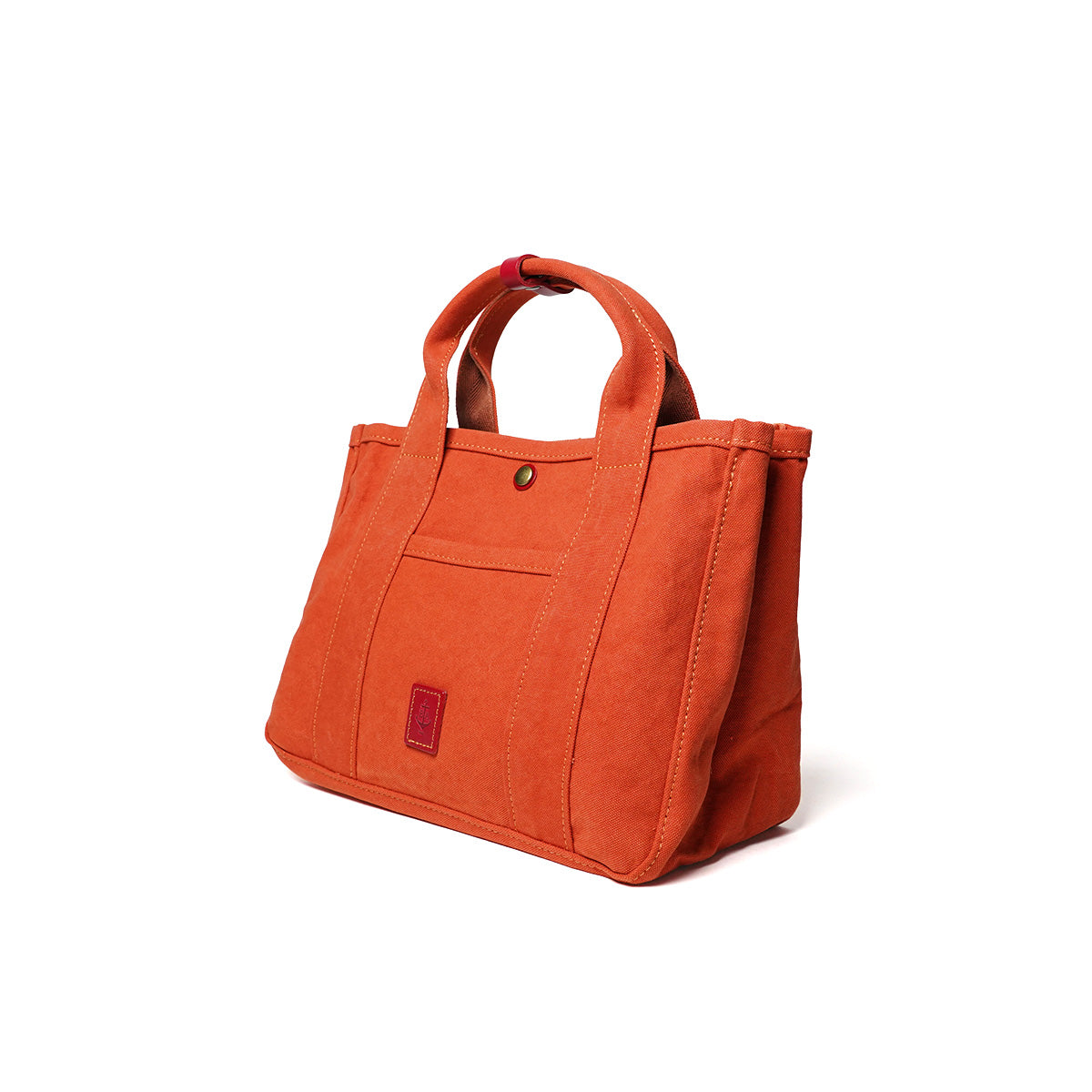
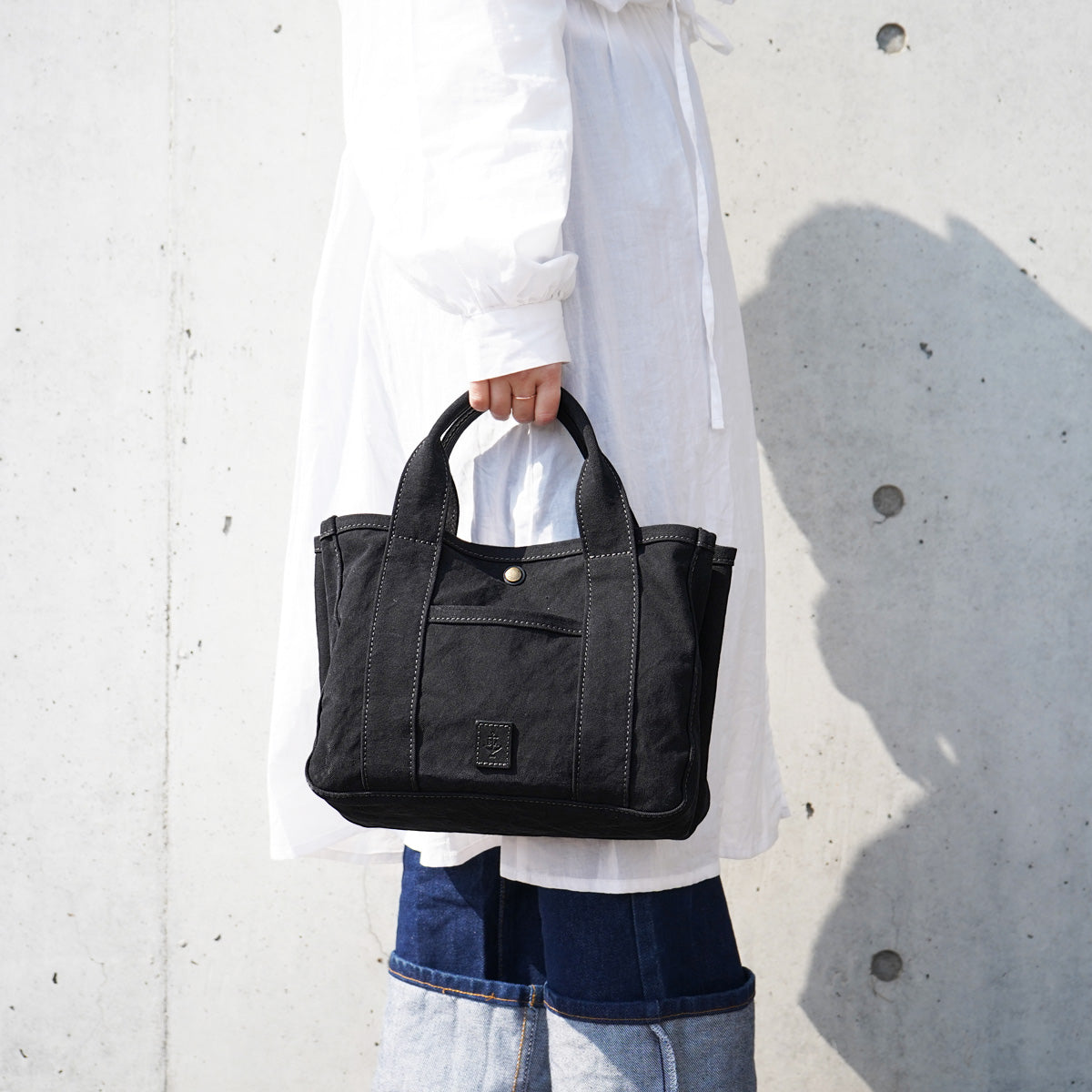
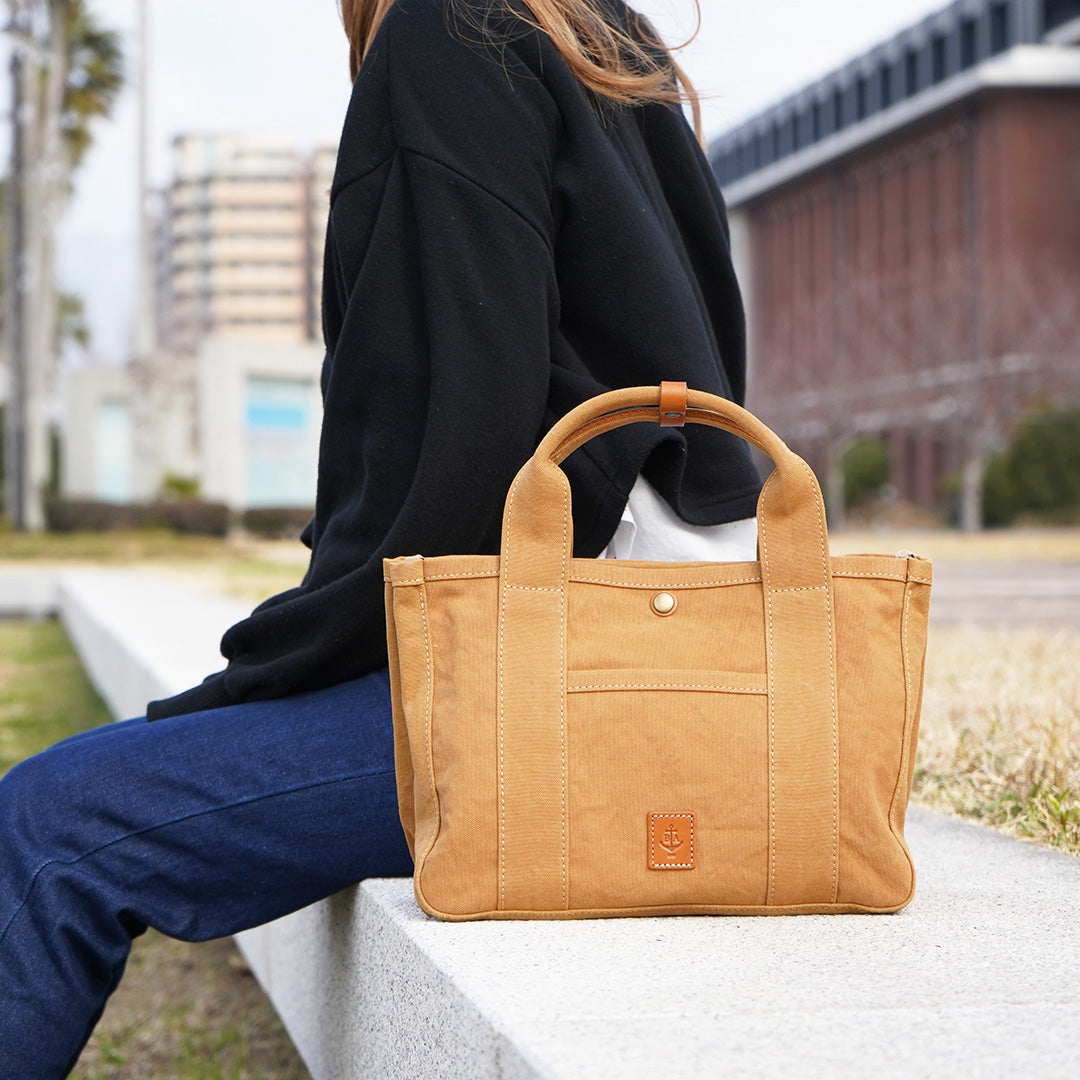
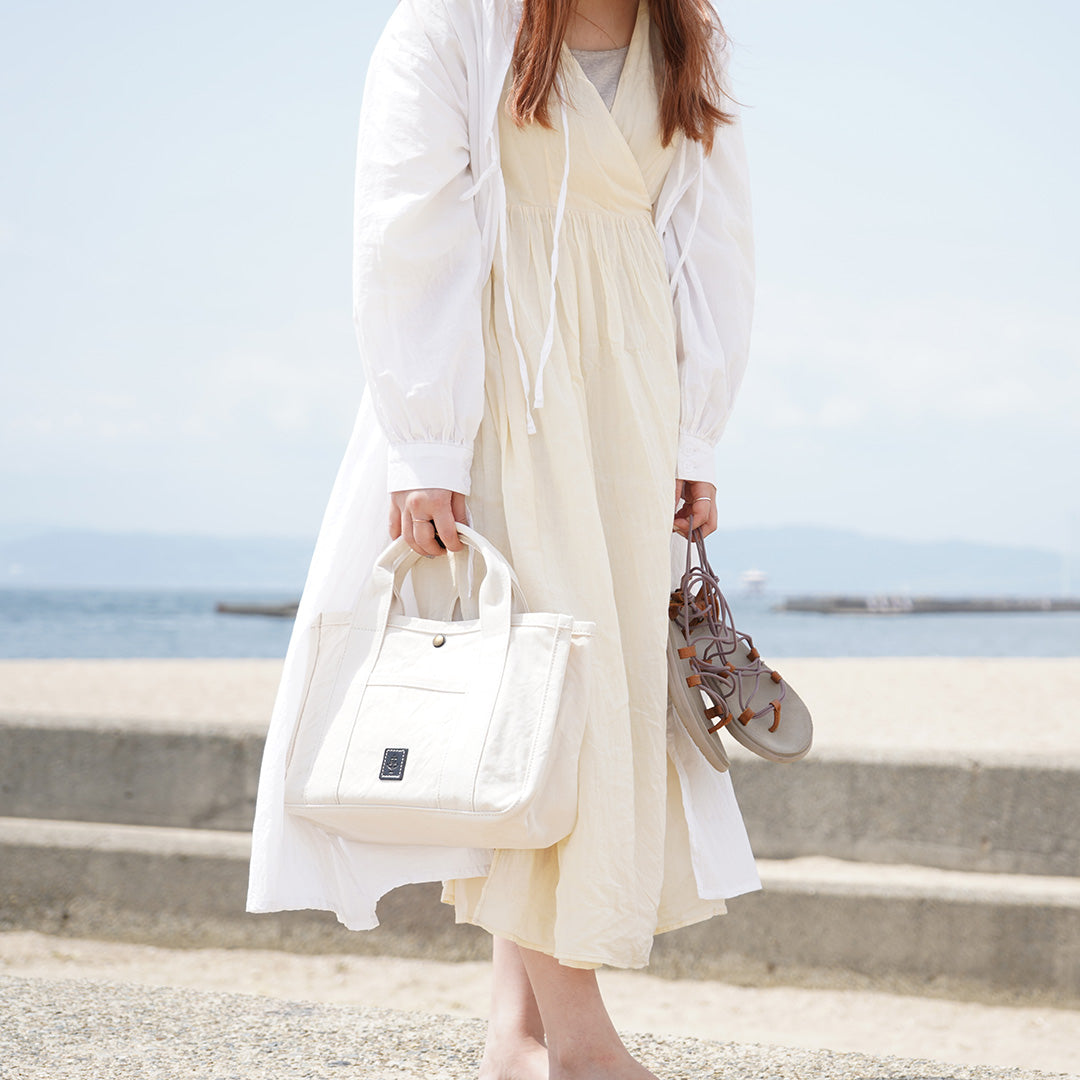
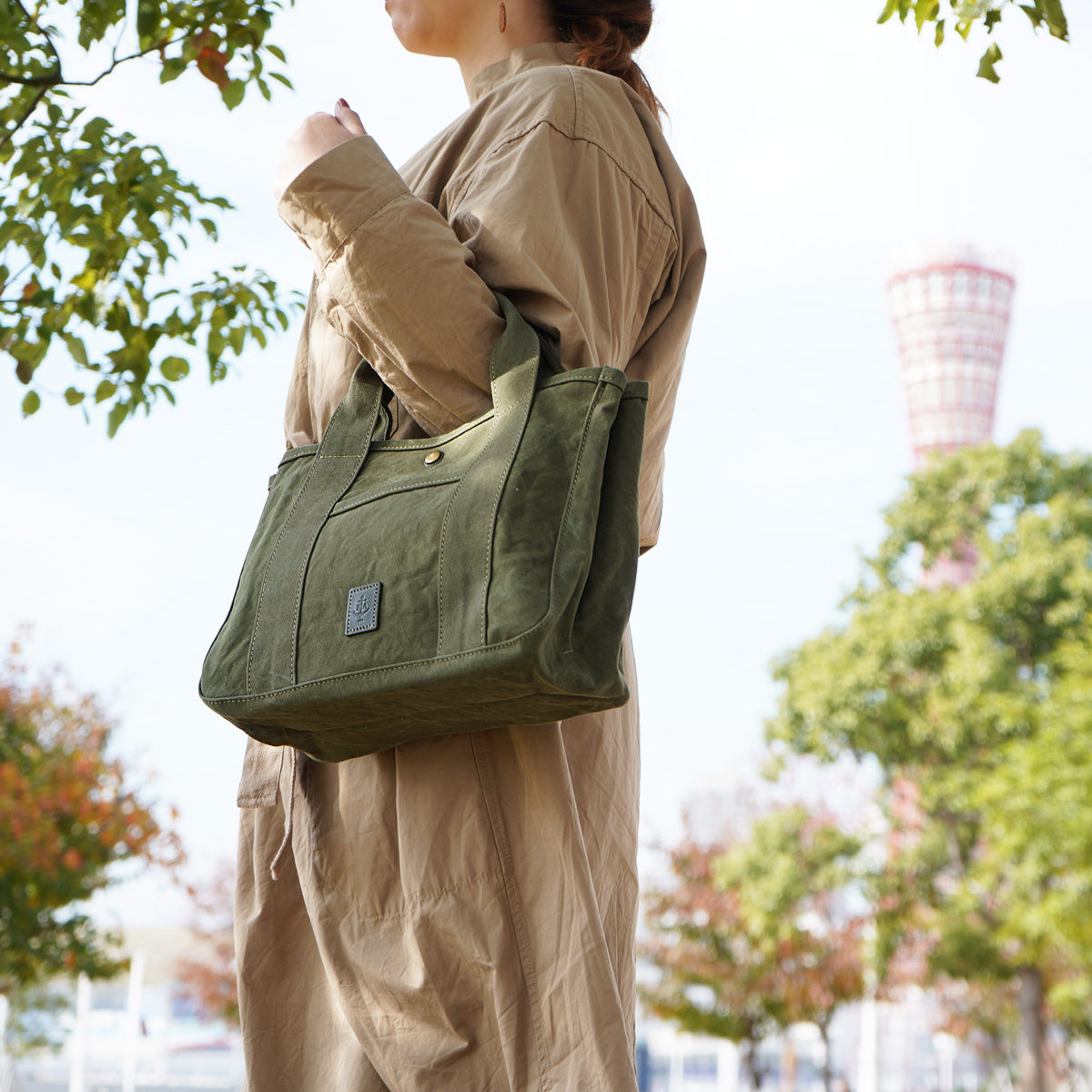
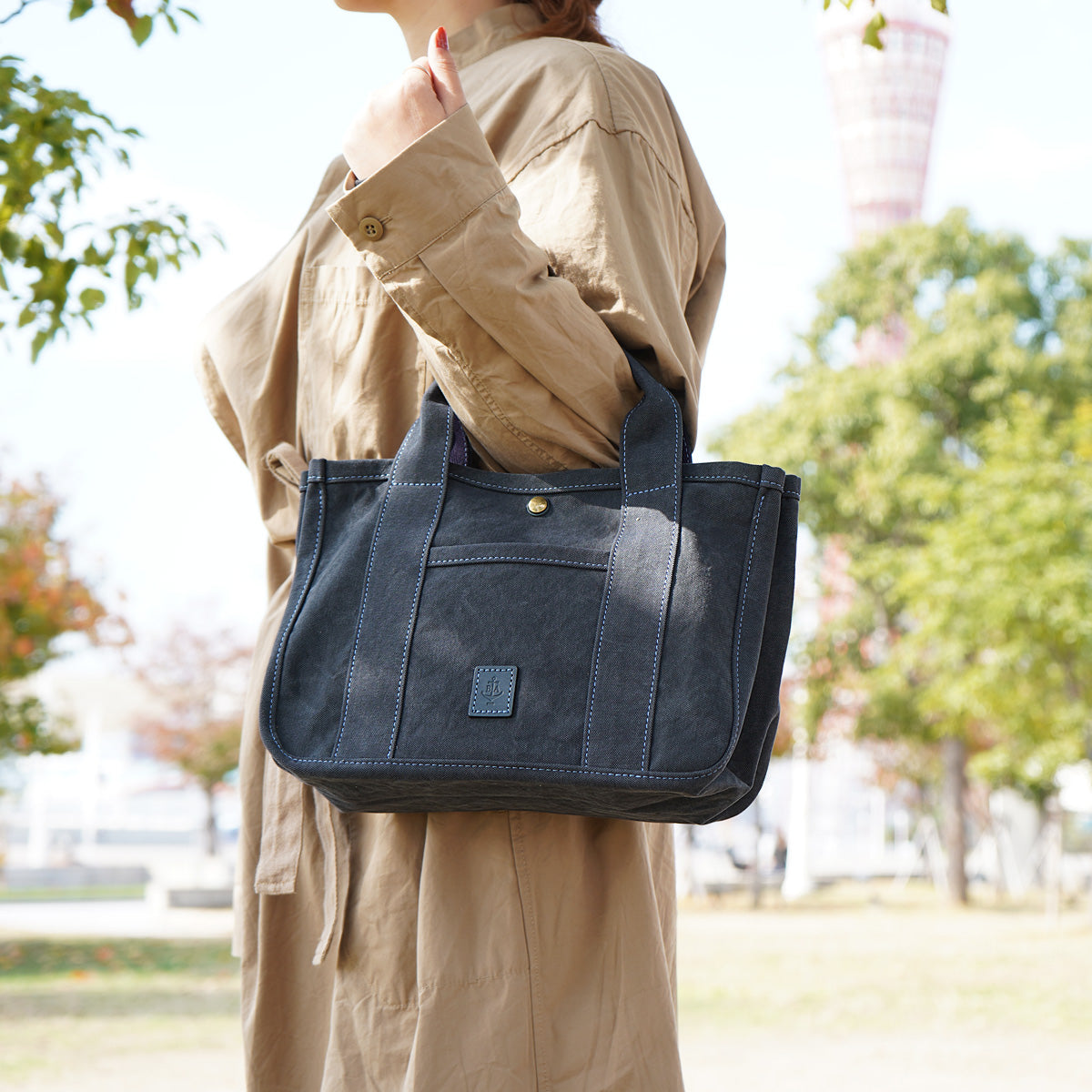
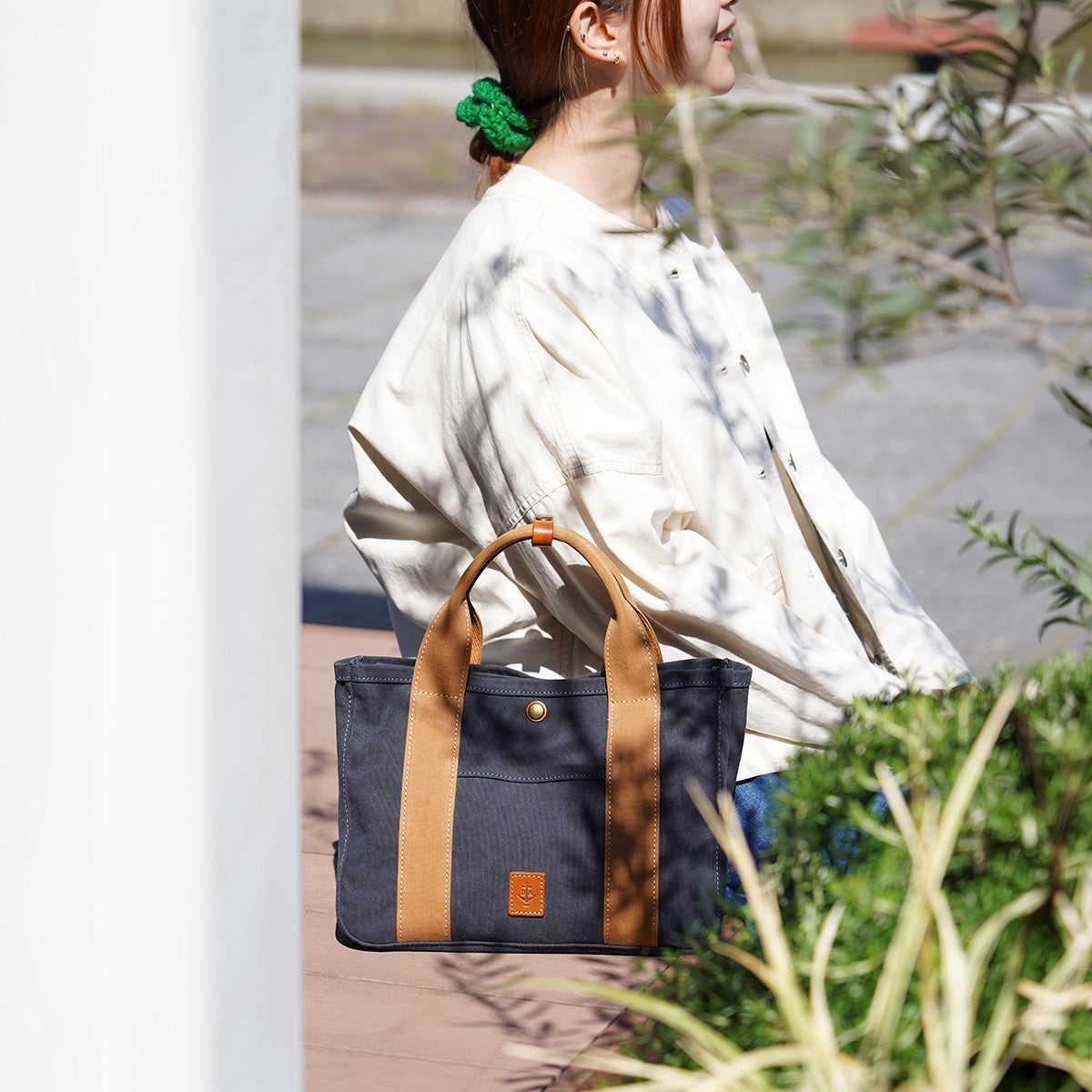
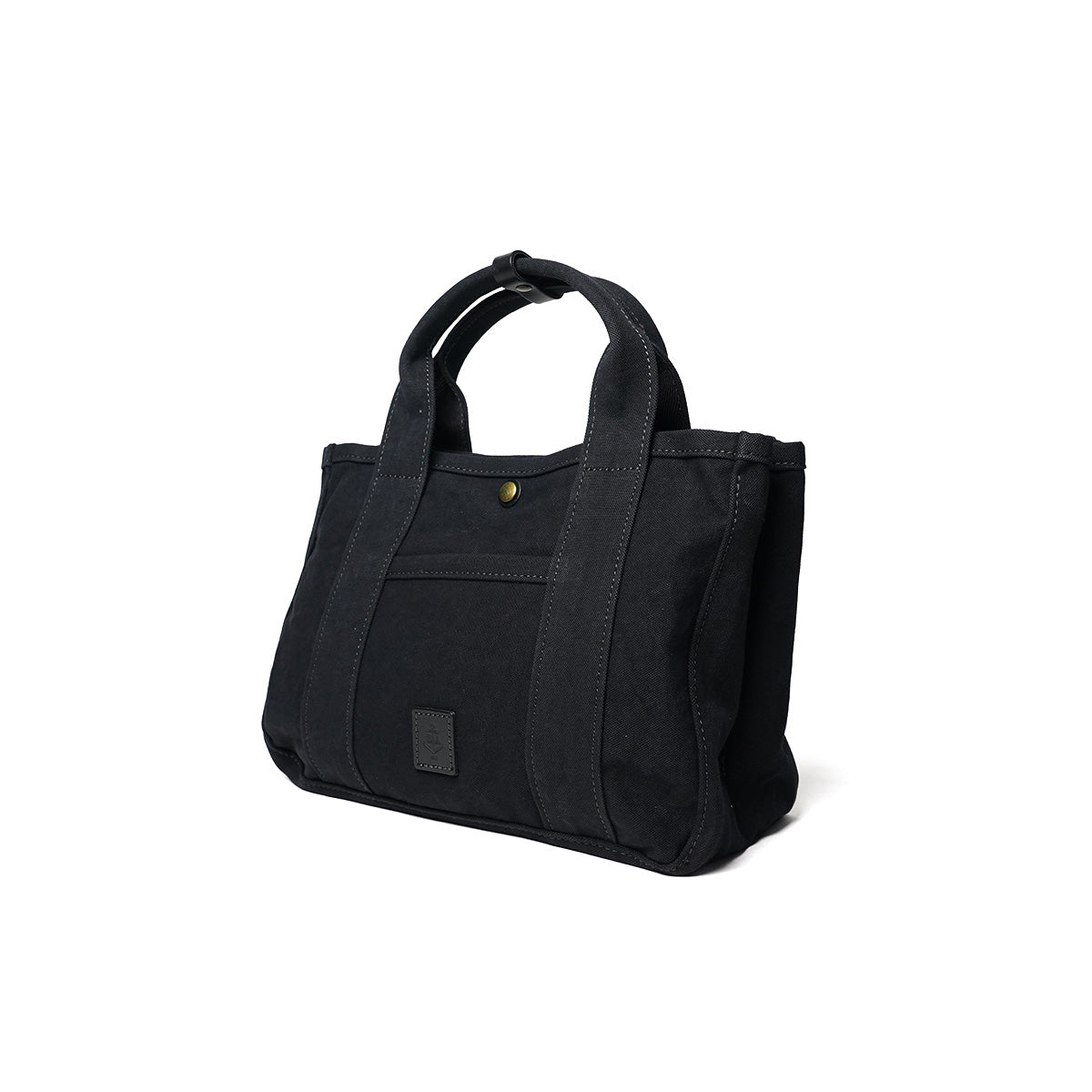
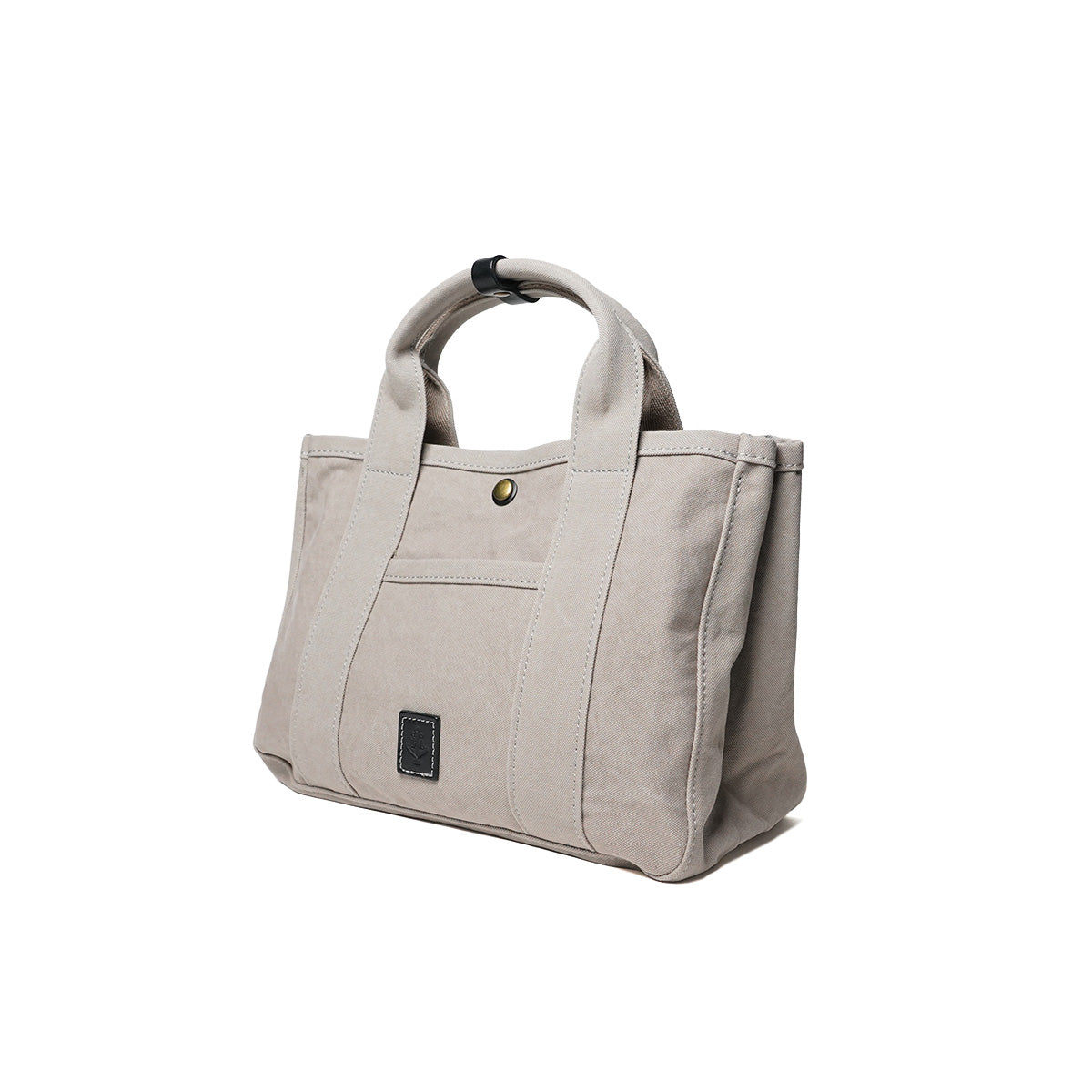
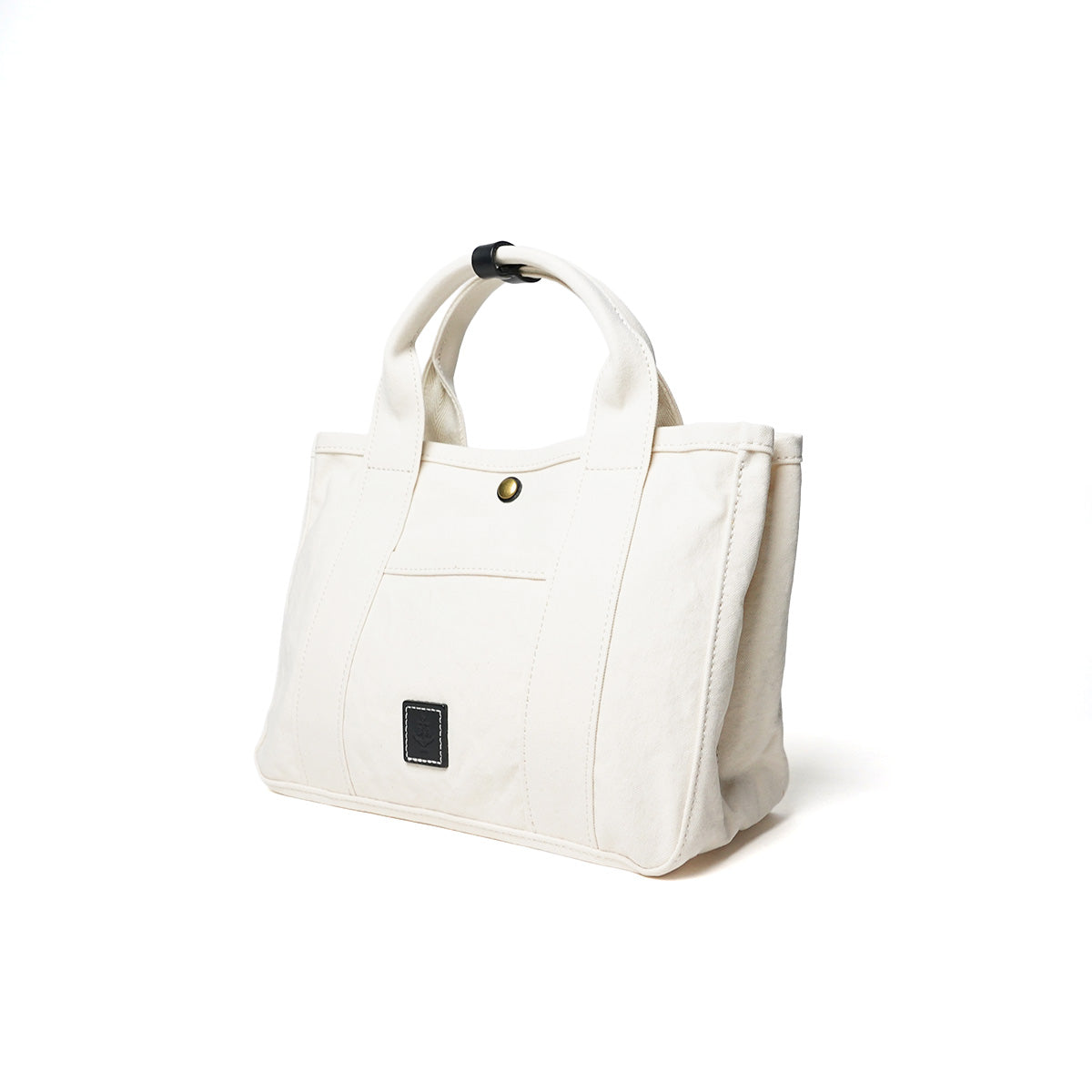
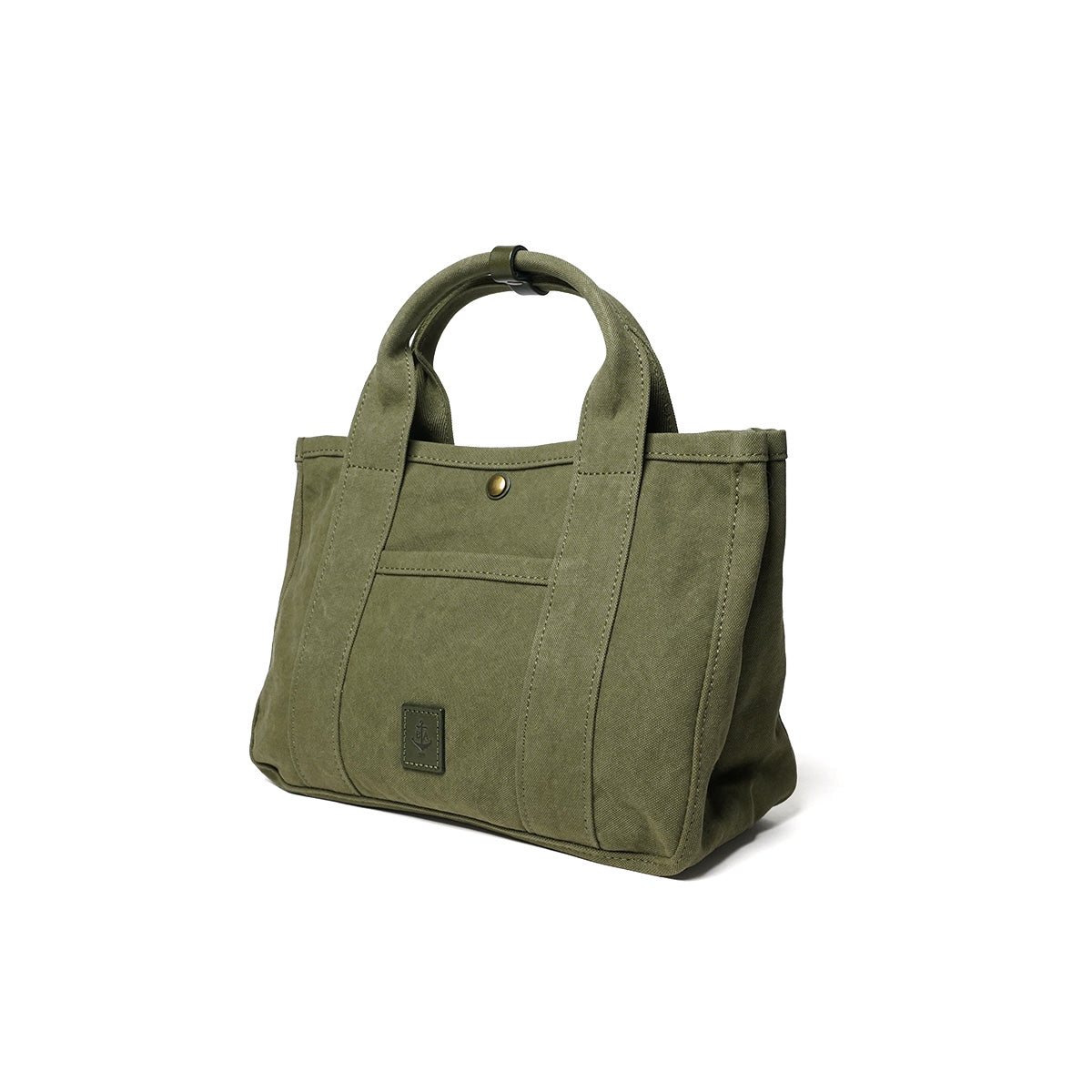
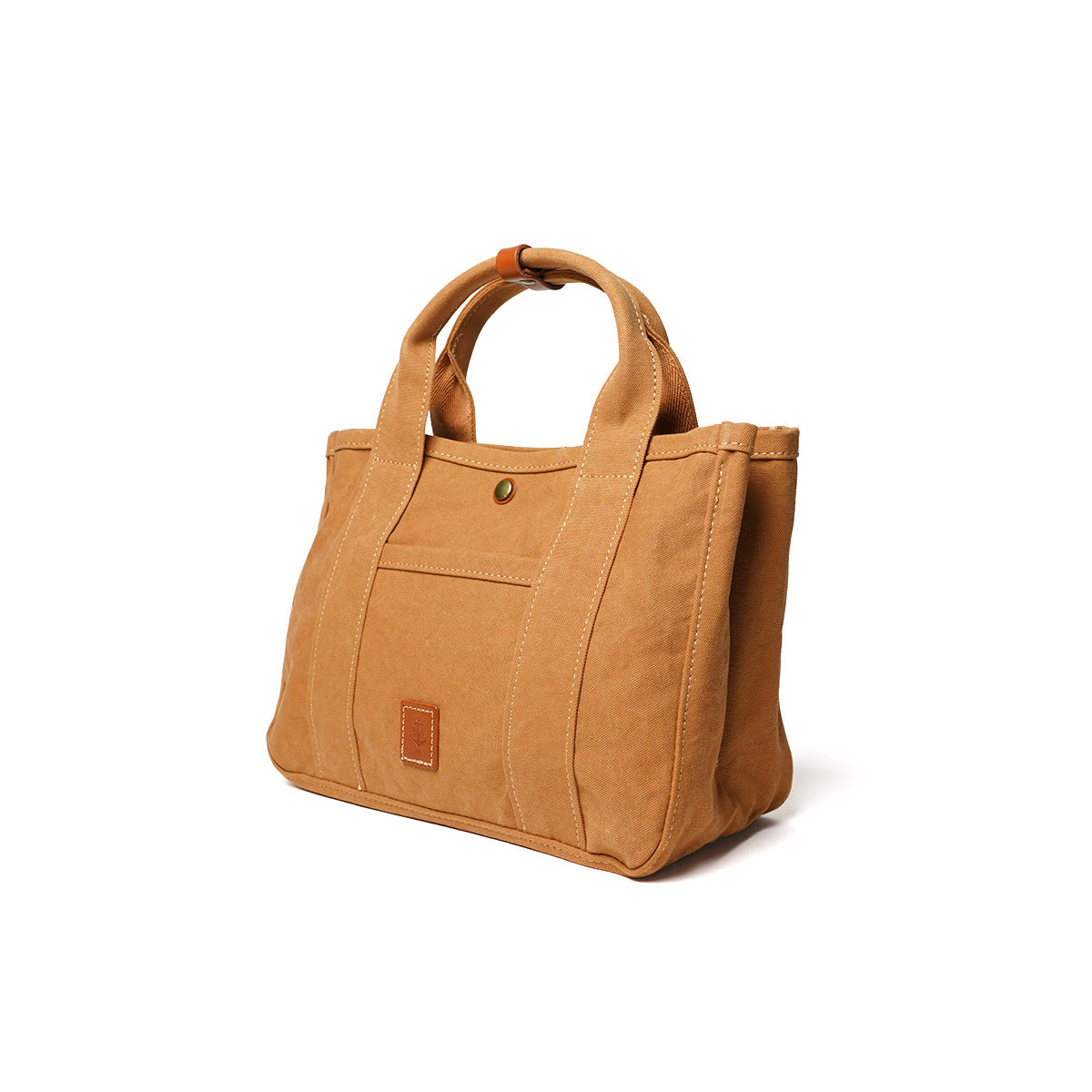
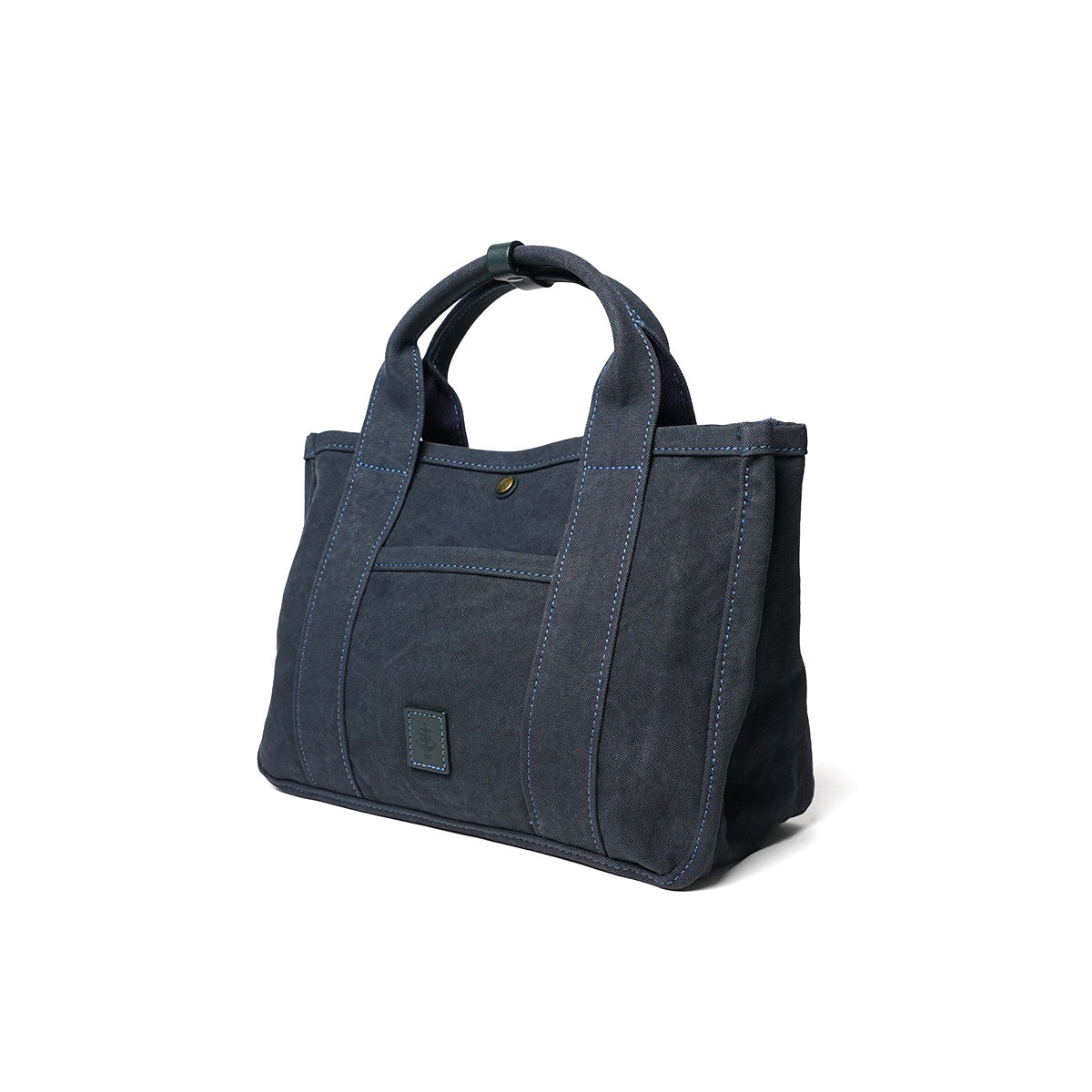
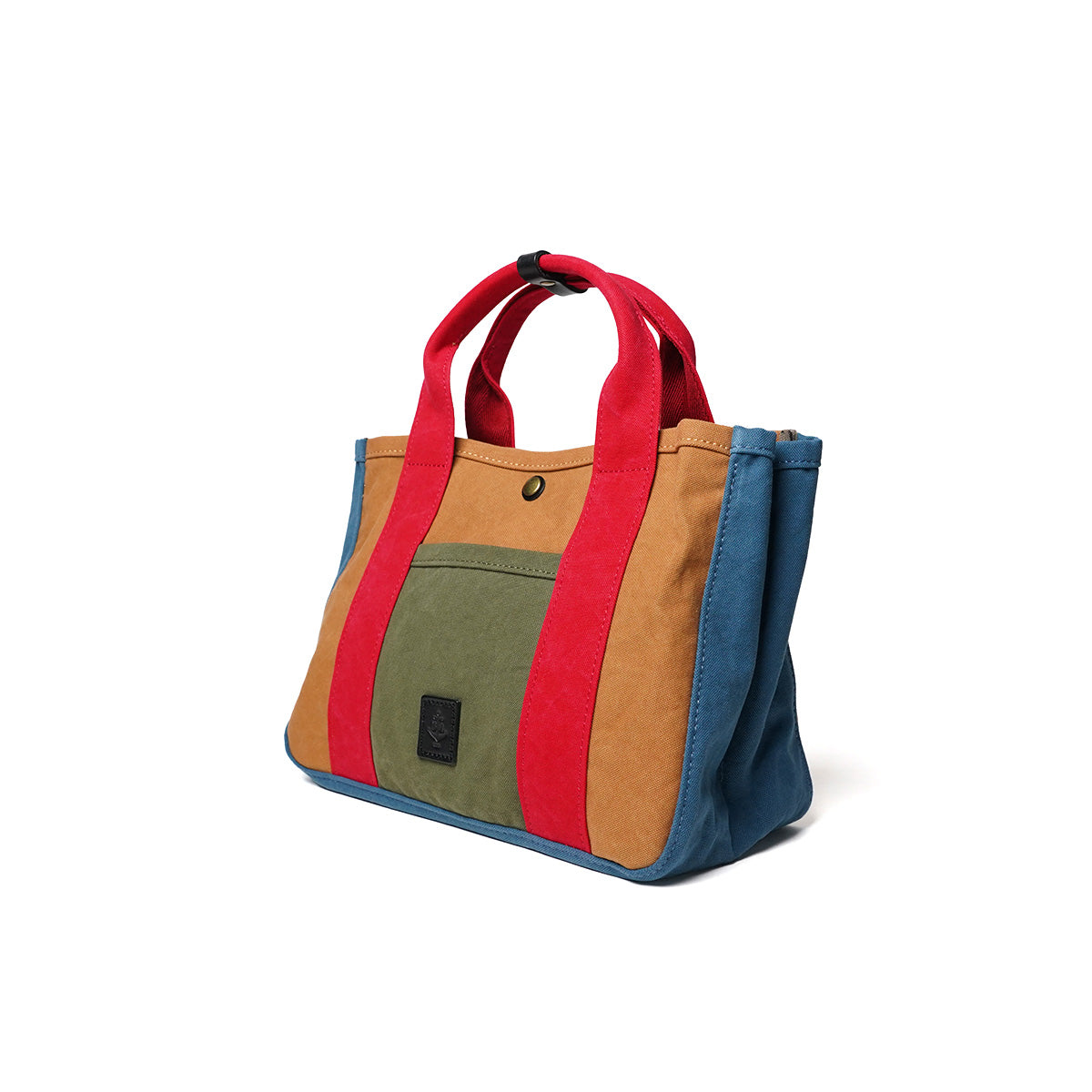
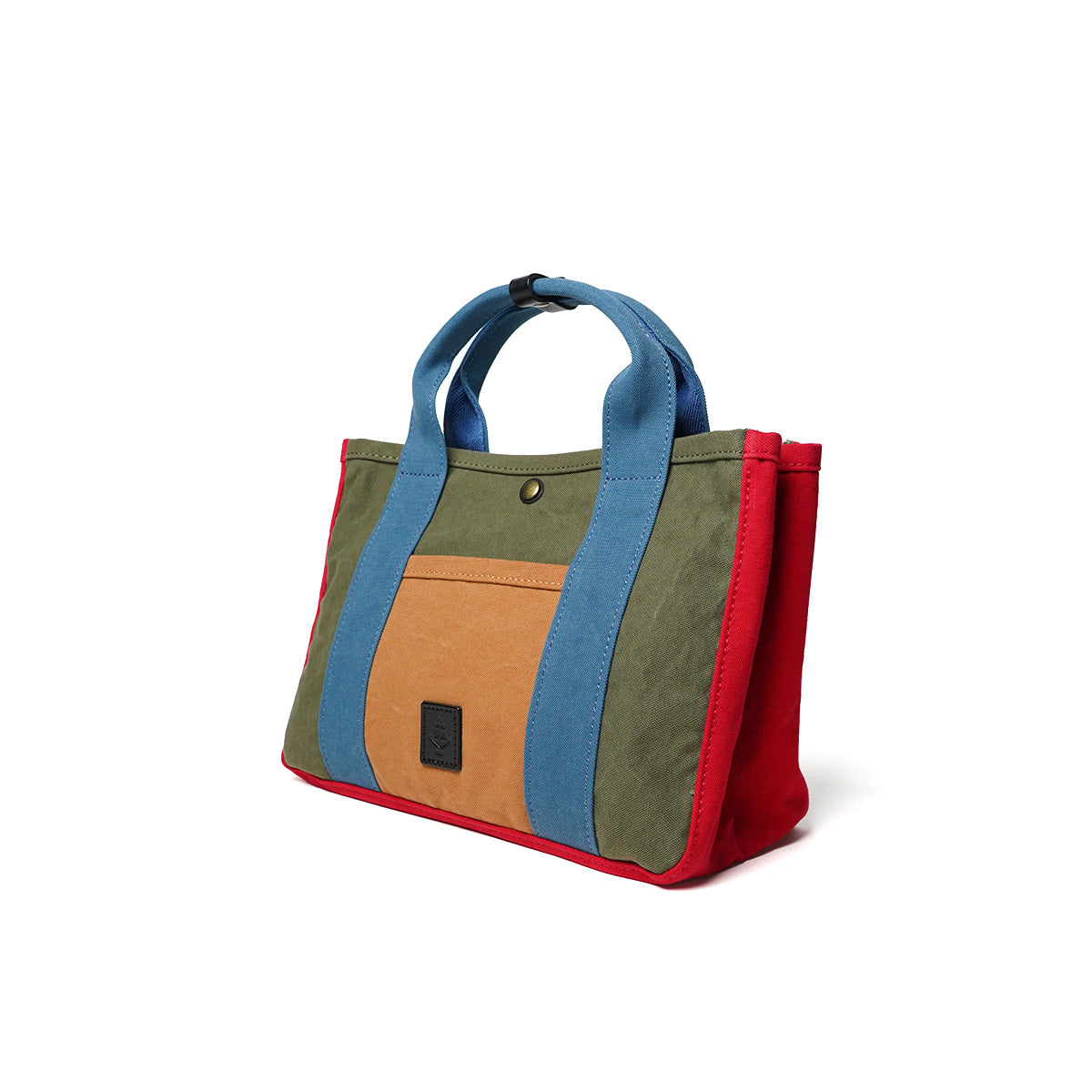
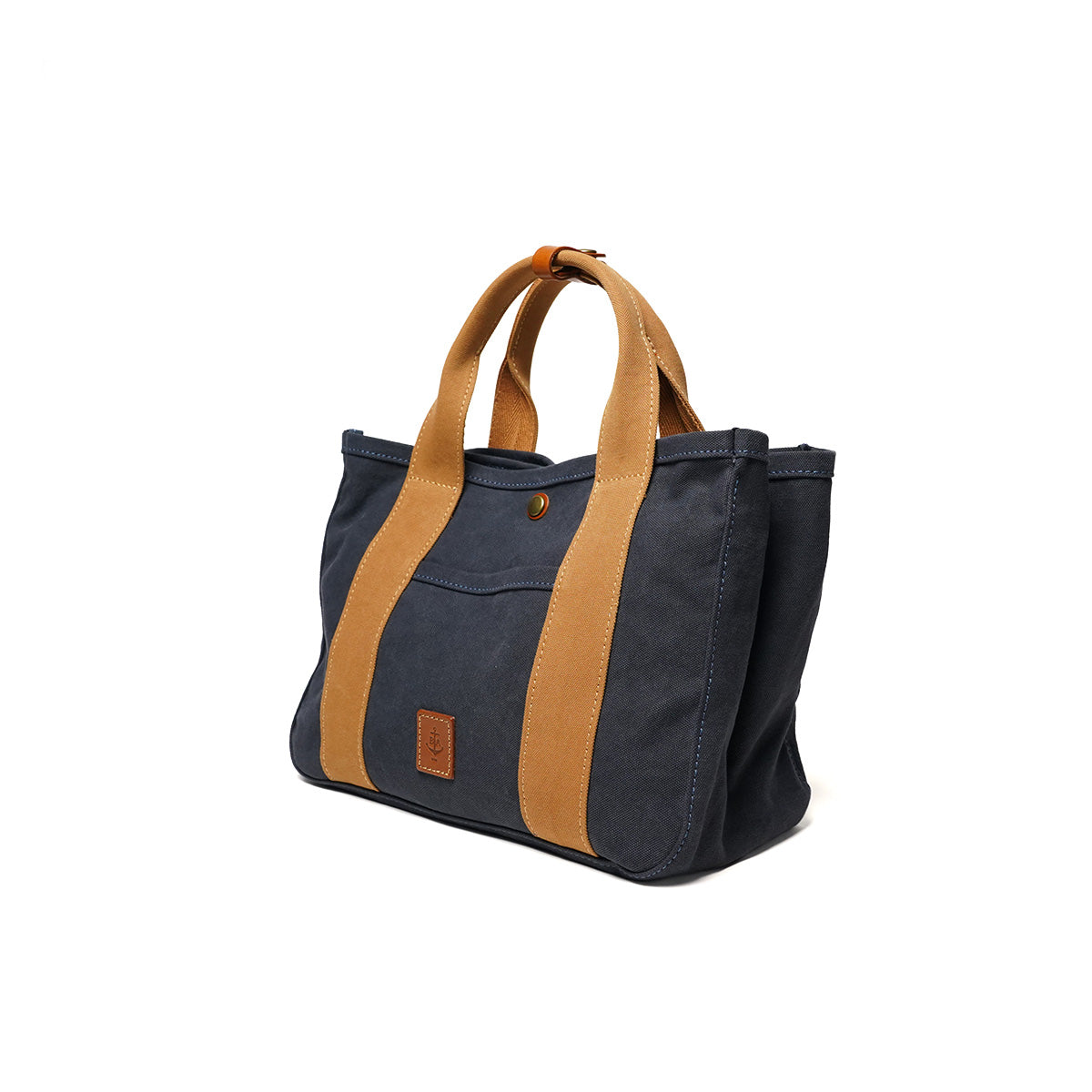
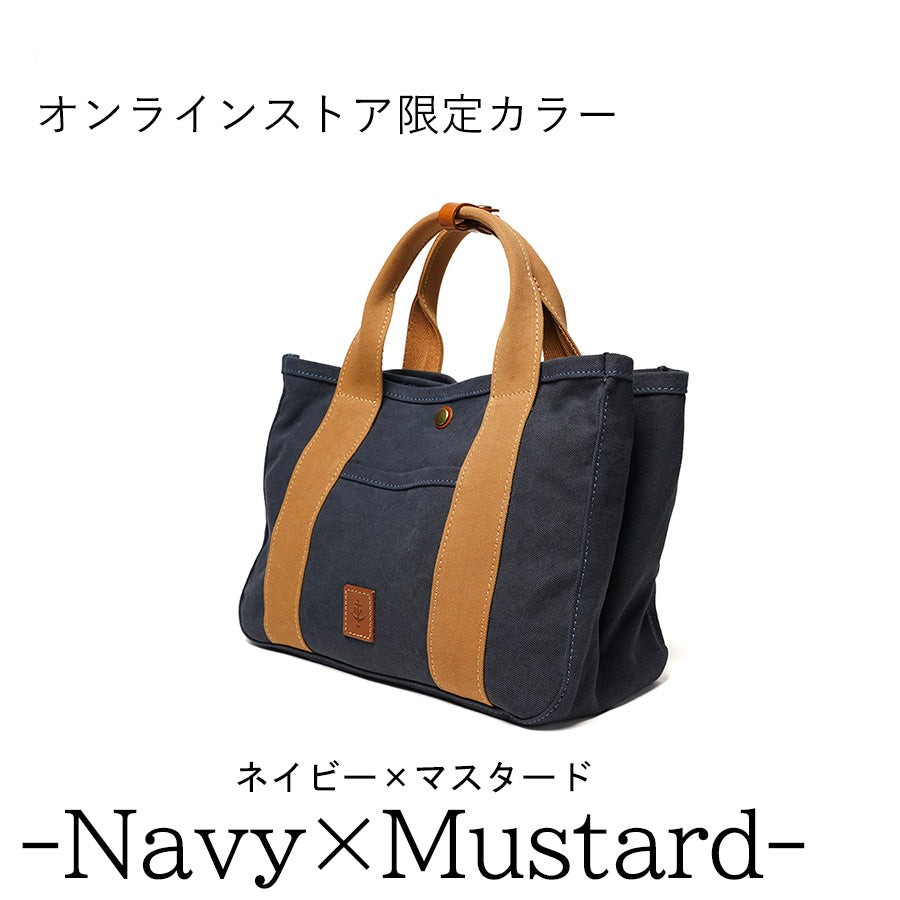
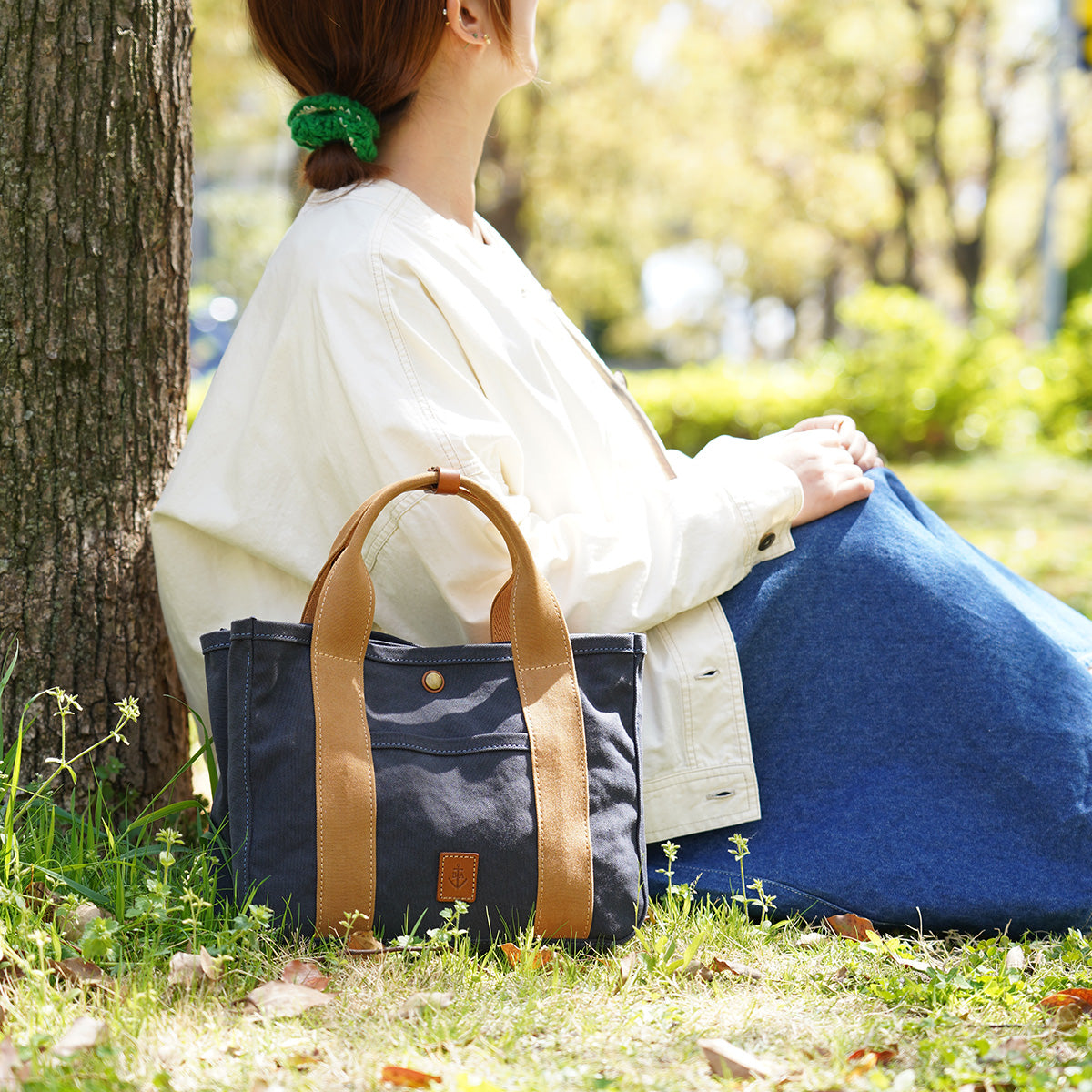
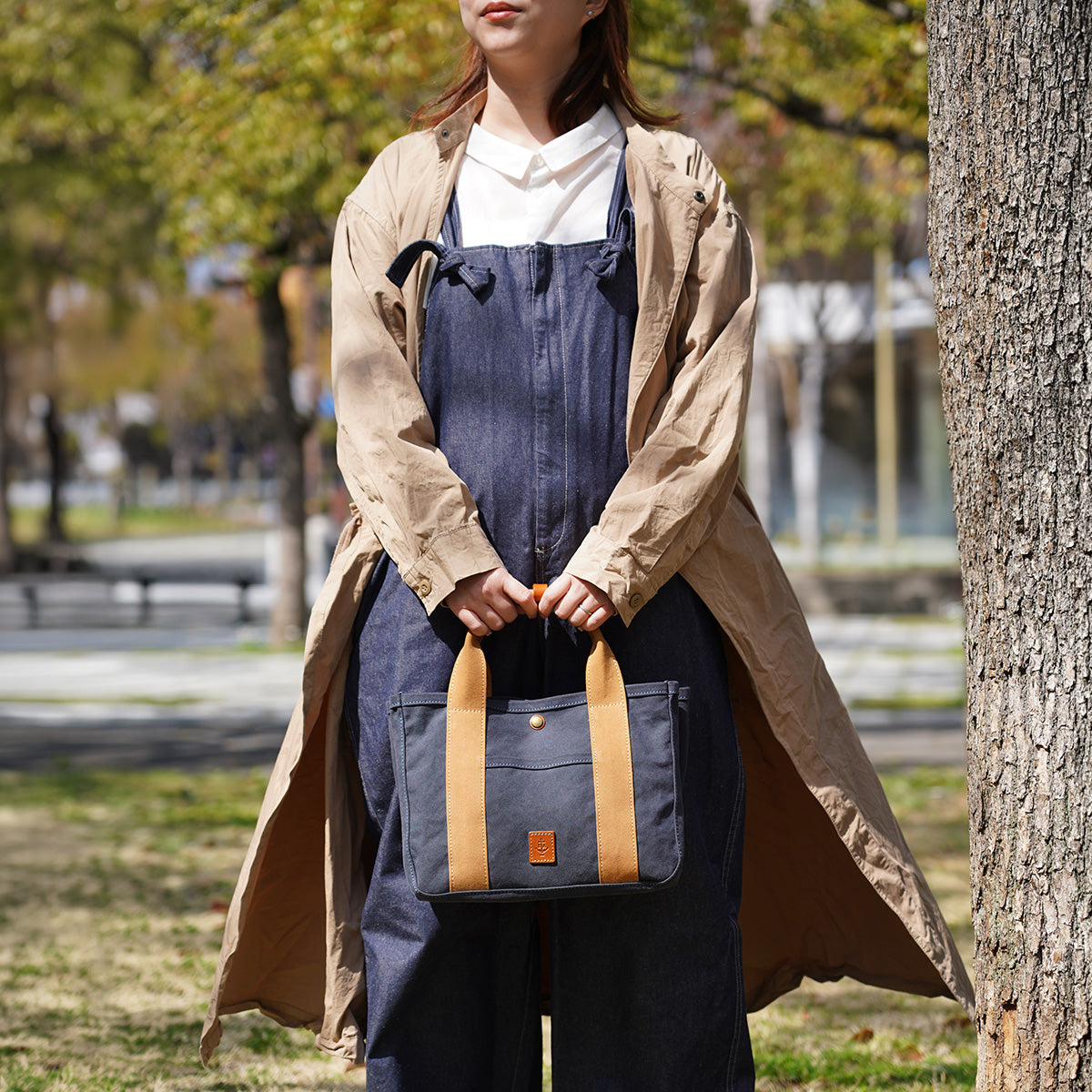
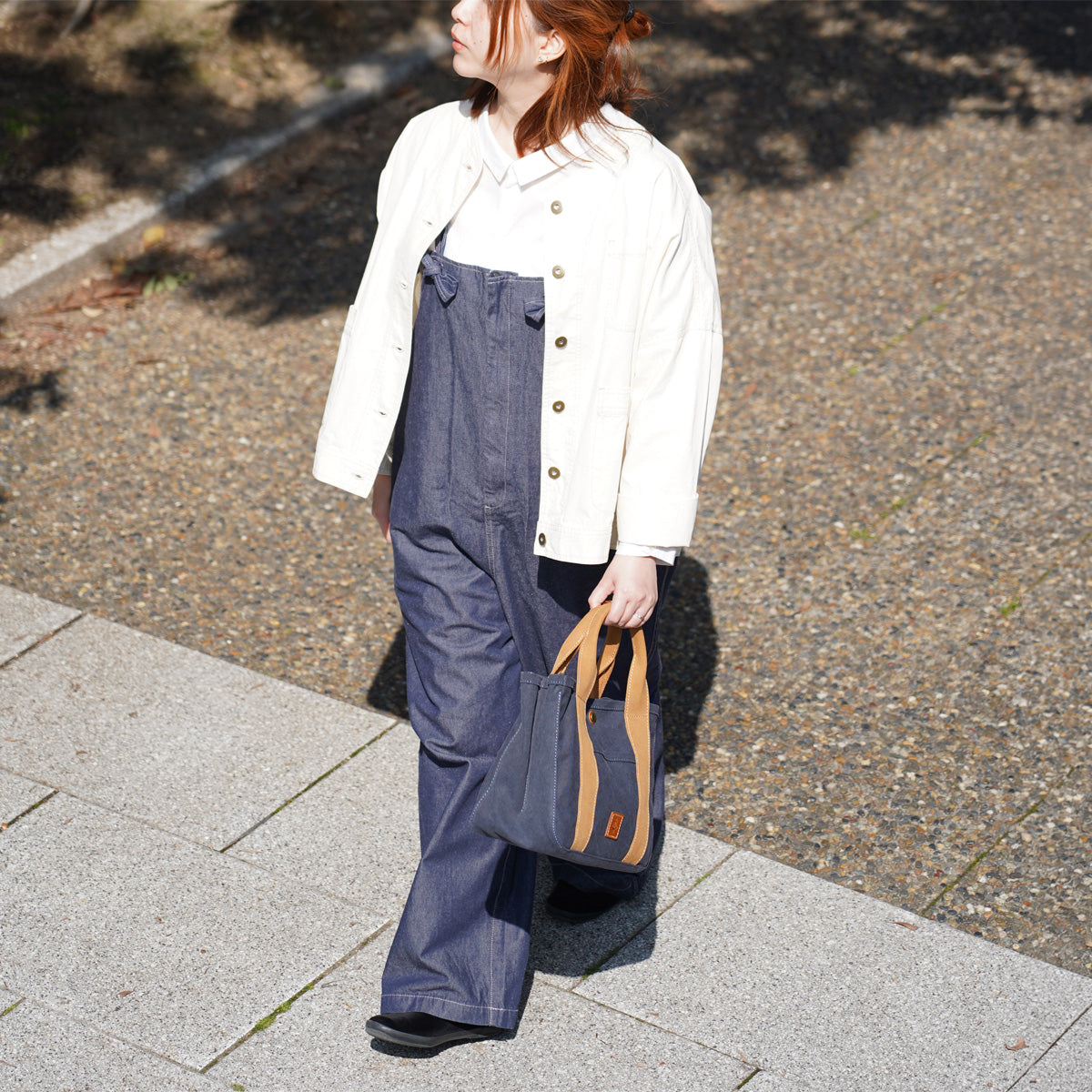
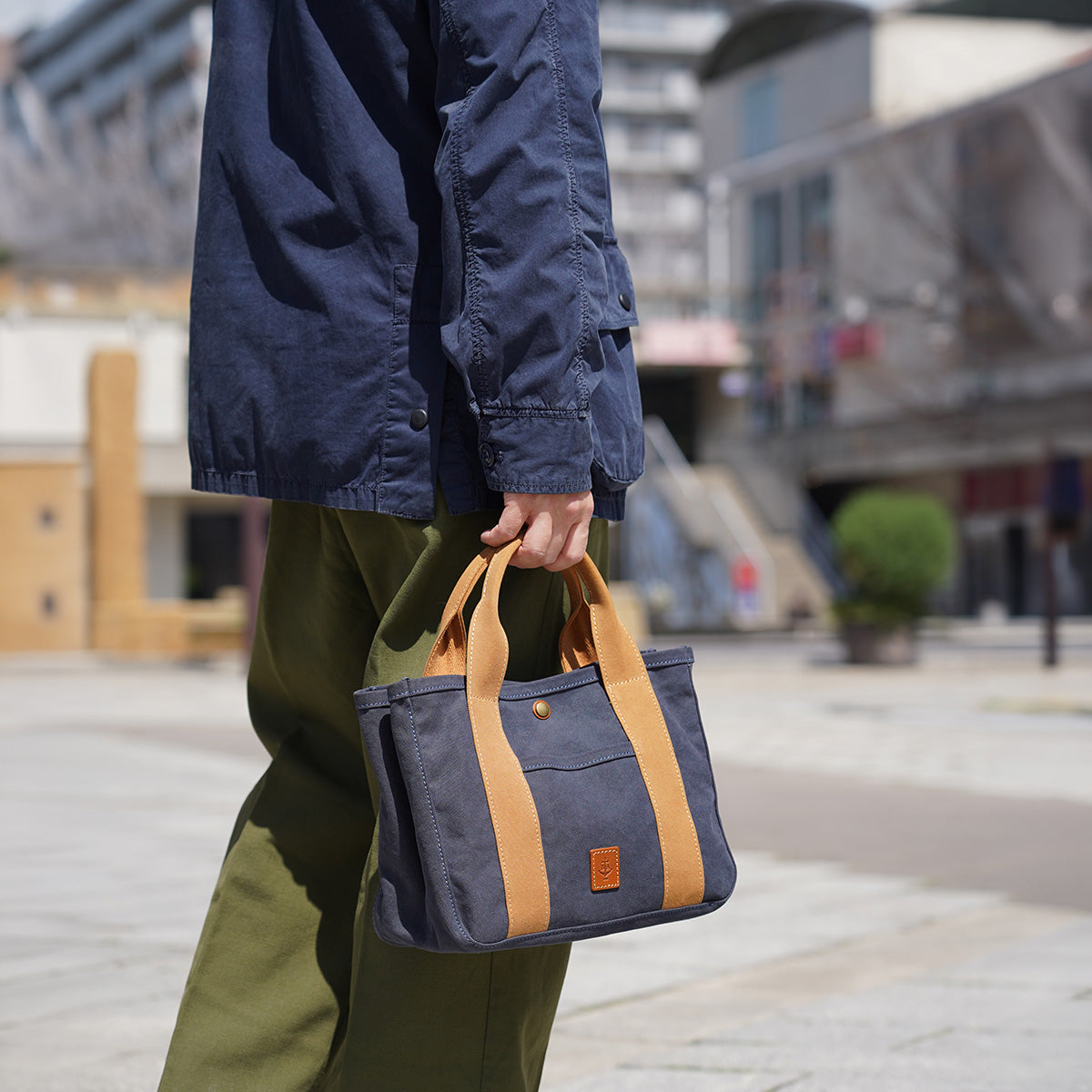
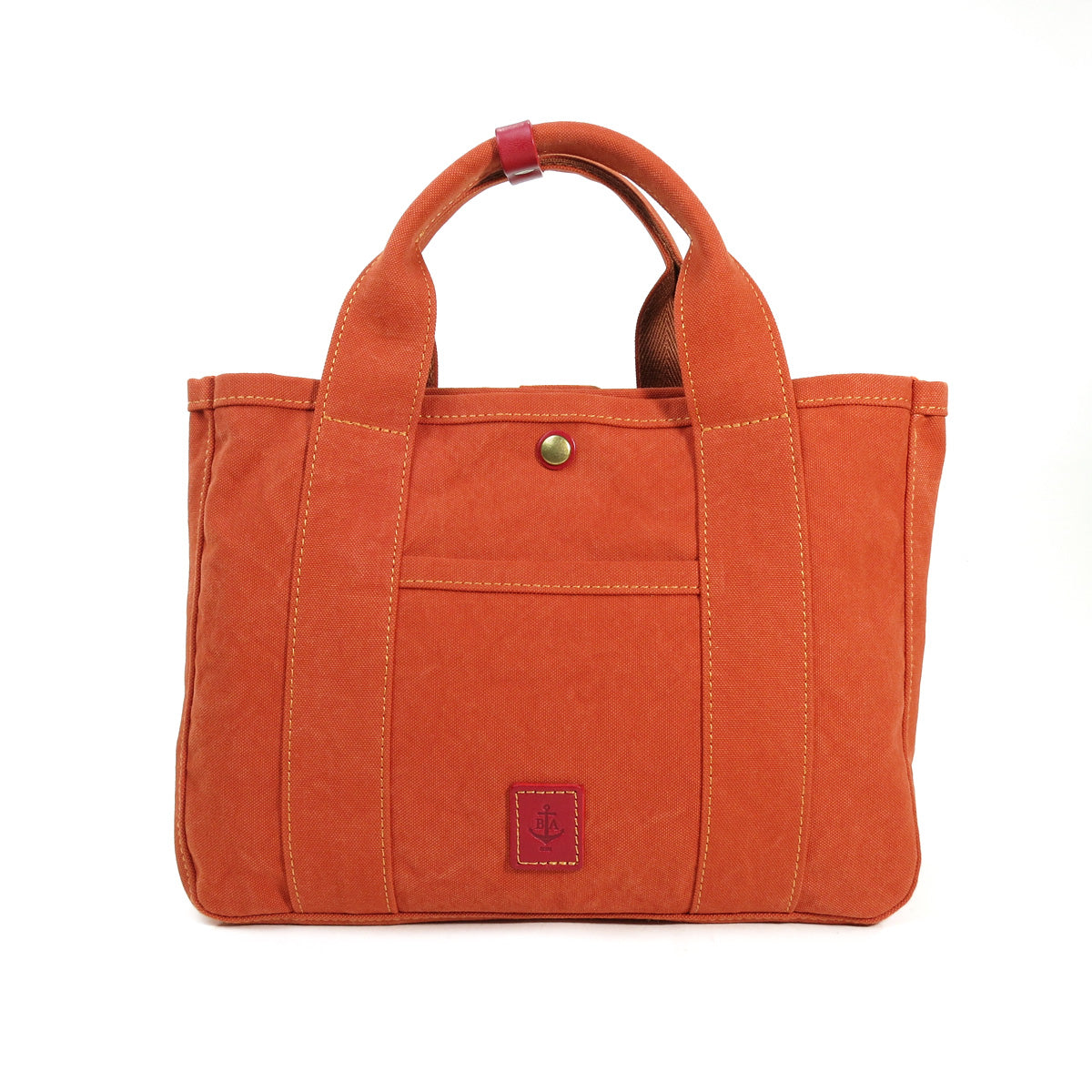
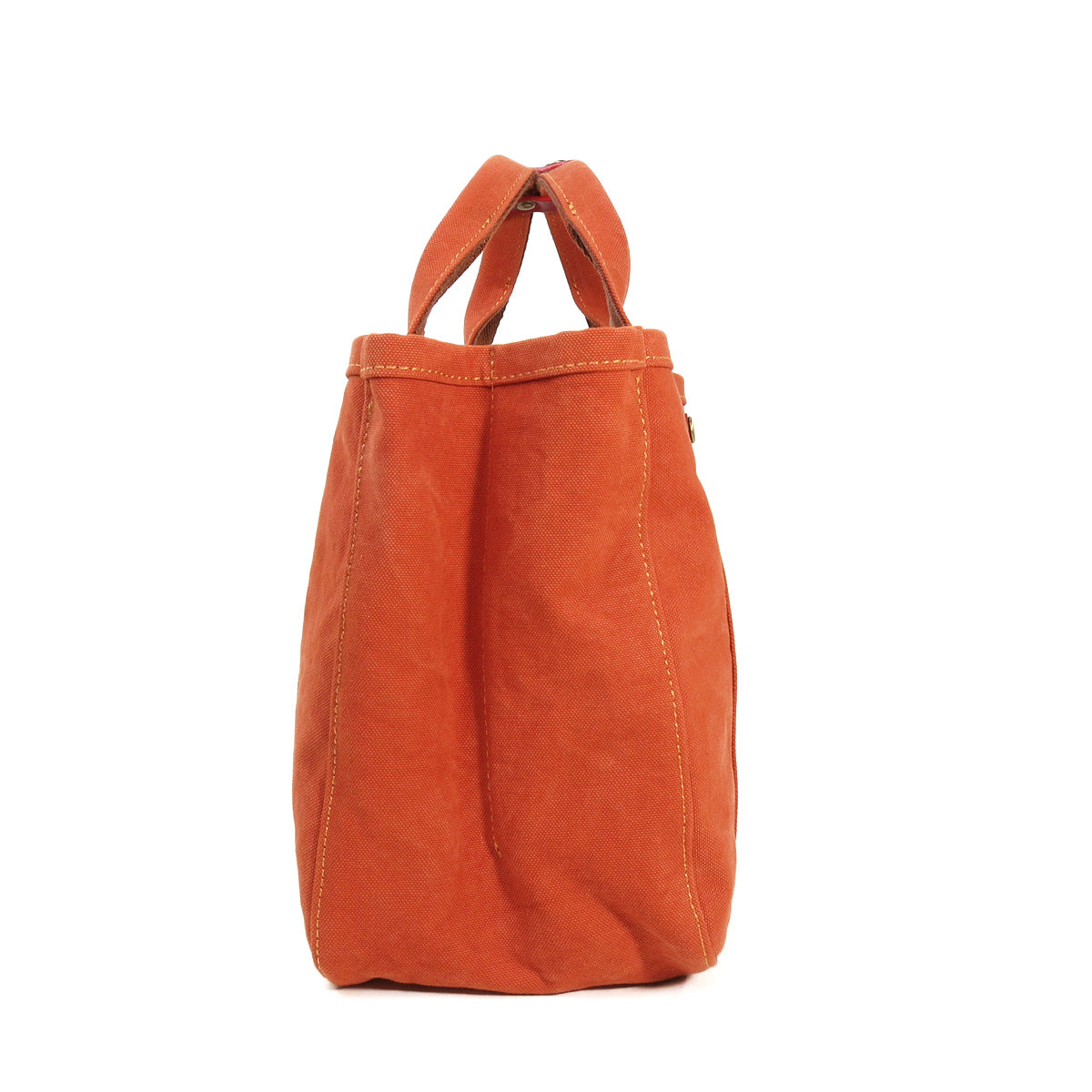
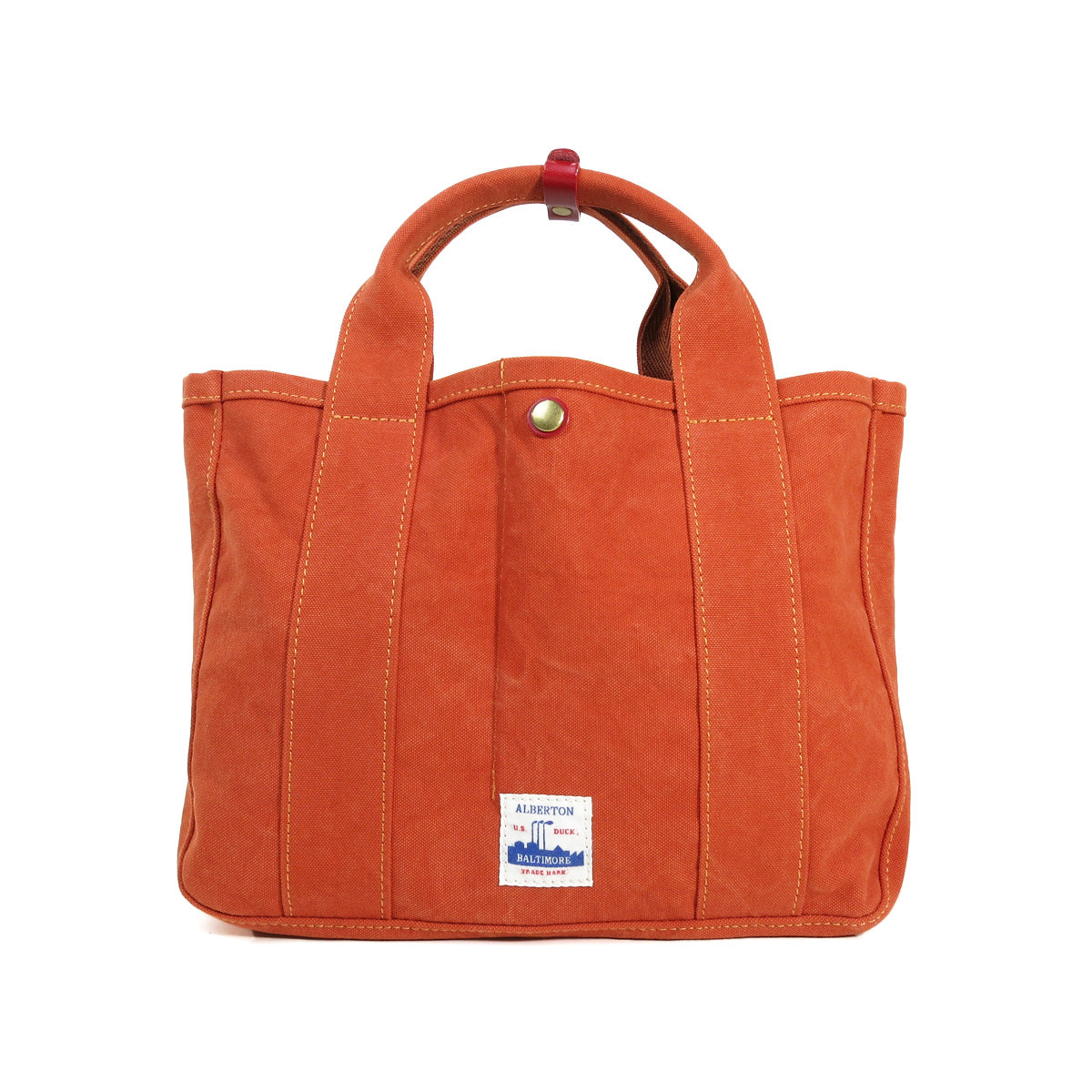
18oz Army Duck Bio Divided Tote Bag, Small, LGRN4020
《18oz Army Duck Bio-Washed》
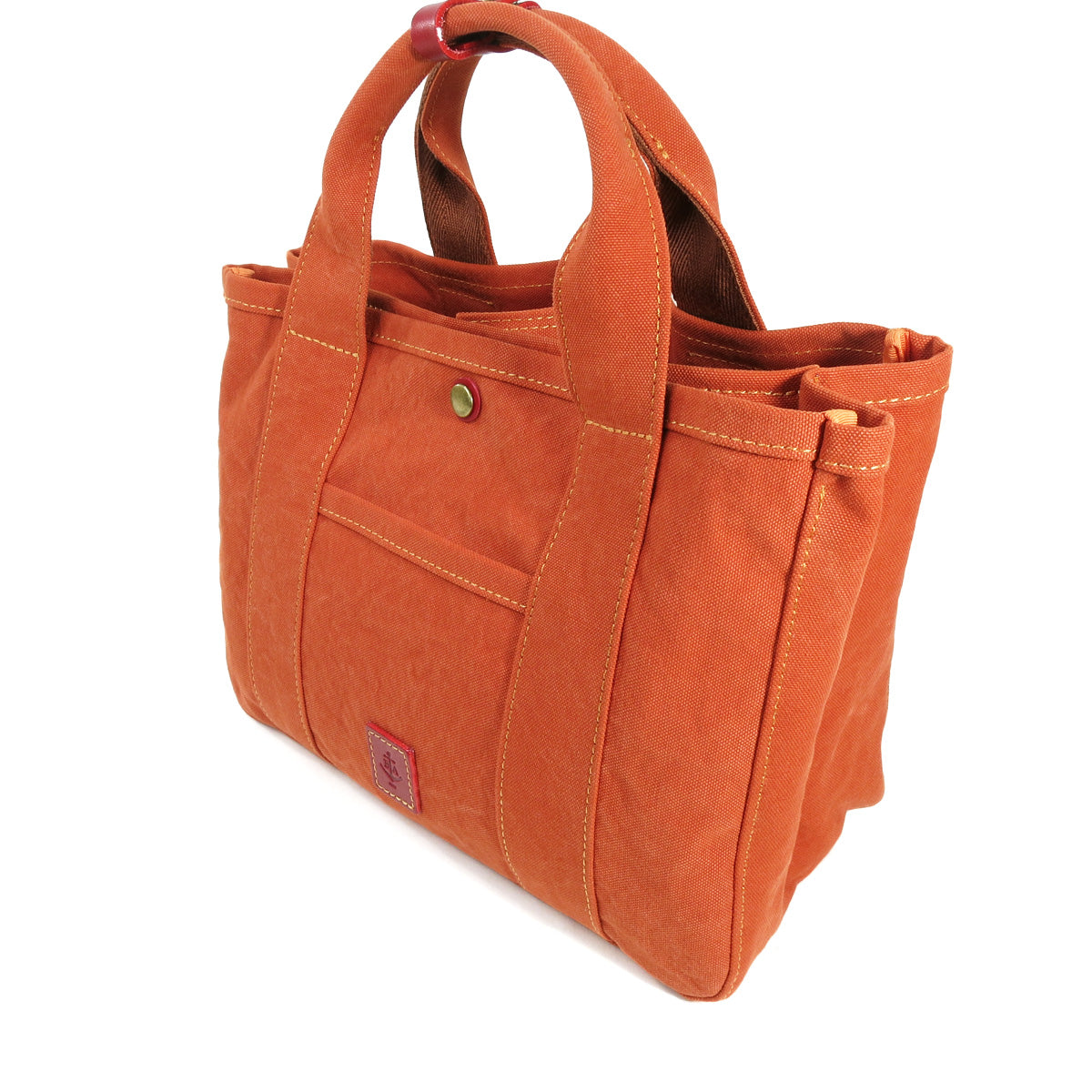
This product uses "duck" canvas, a plain weave fabric made from carefully woven fine count yarn. By increasing the density of the weave, we've achieved surprising strength and durability, despite its thin and lightweight finish.
Furthermore, the surface has been bio-washed, giving it a rich, well-worn texture, as if it has been used for many years. The natural wrinkles and soft colors become even more appealing with use.
BAGGY'S ANNEX's signature unisex design naturally blends into daily life regardless of gender, exuding a sophisticated presence as a fashion accessory.
《Versatile Mini Tote》
A highly functional tote bag that is compact yet offers reliable storage capacity.
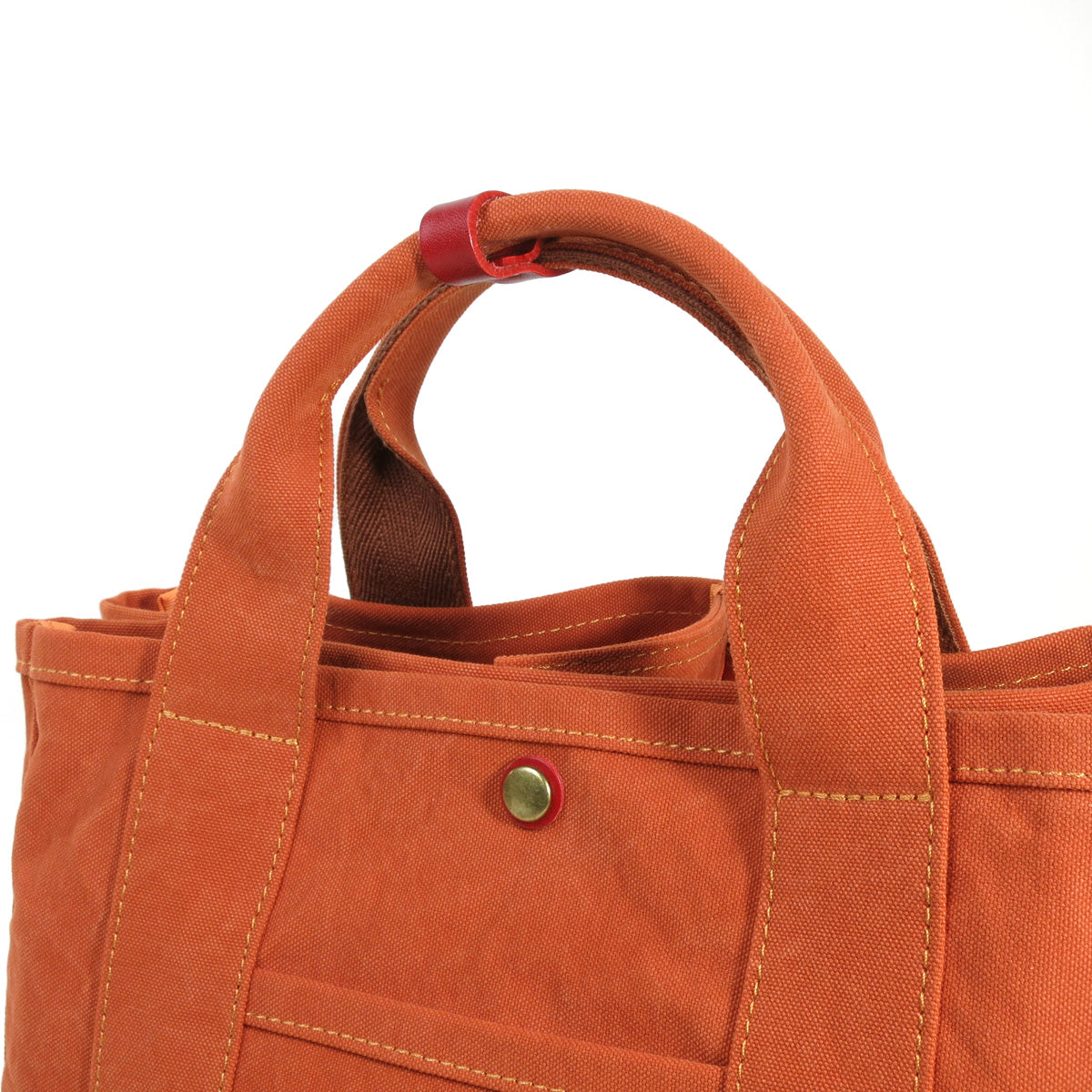
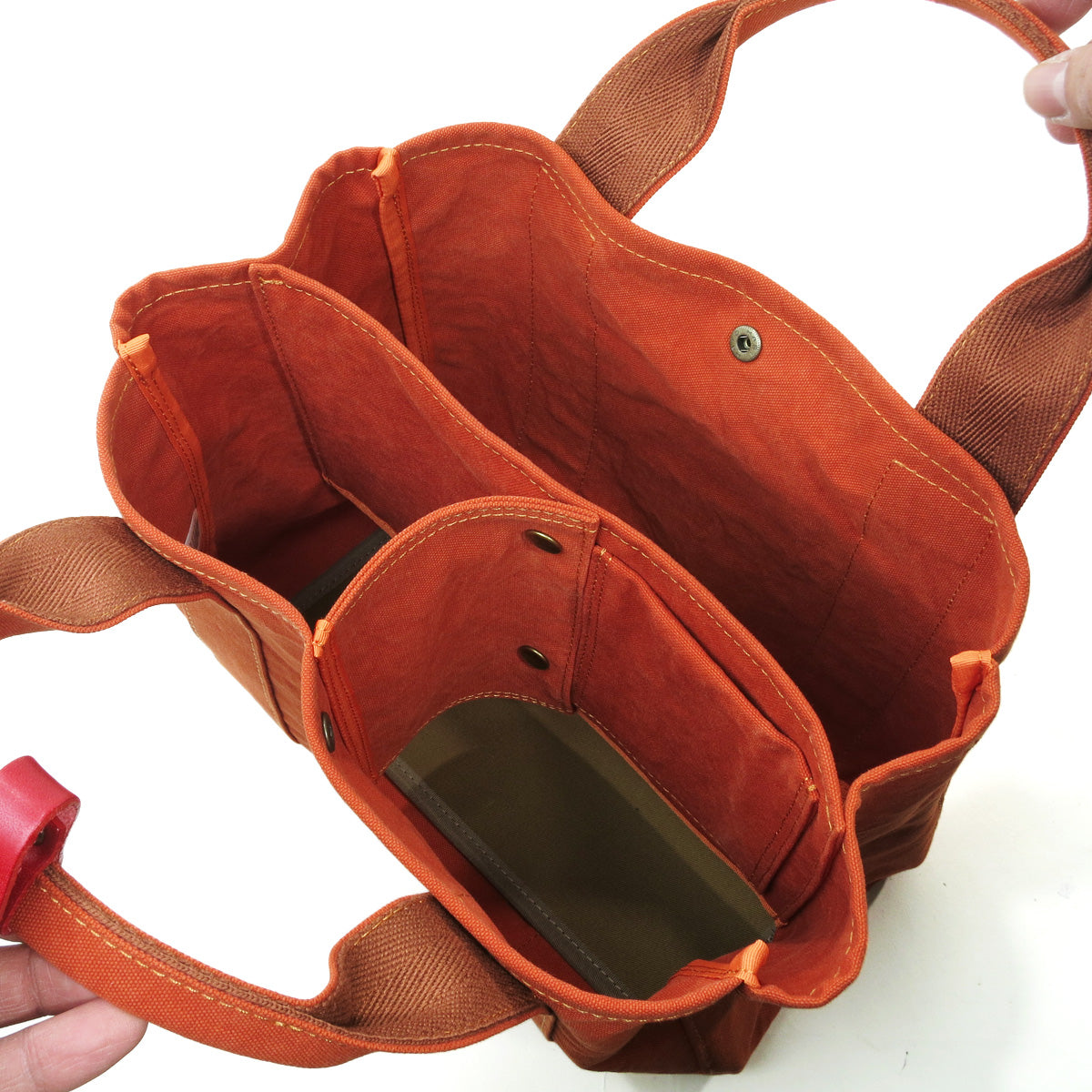
On the front of the bag, there's an outer pocket for quick access to small items. The handles are made from the same durable army duck fabric as the main body, providing a firm and comfortable grip that fits snugly in your hand.
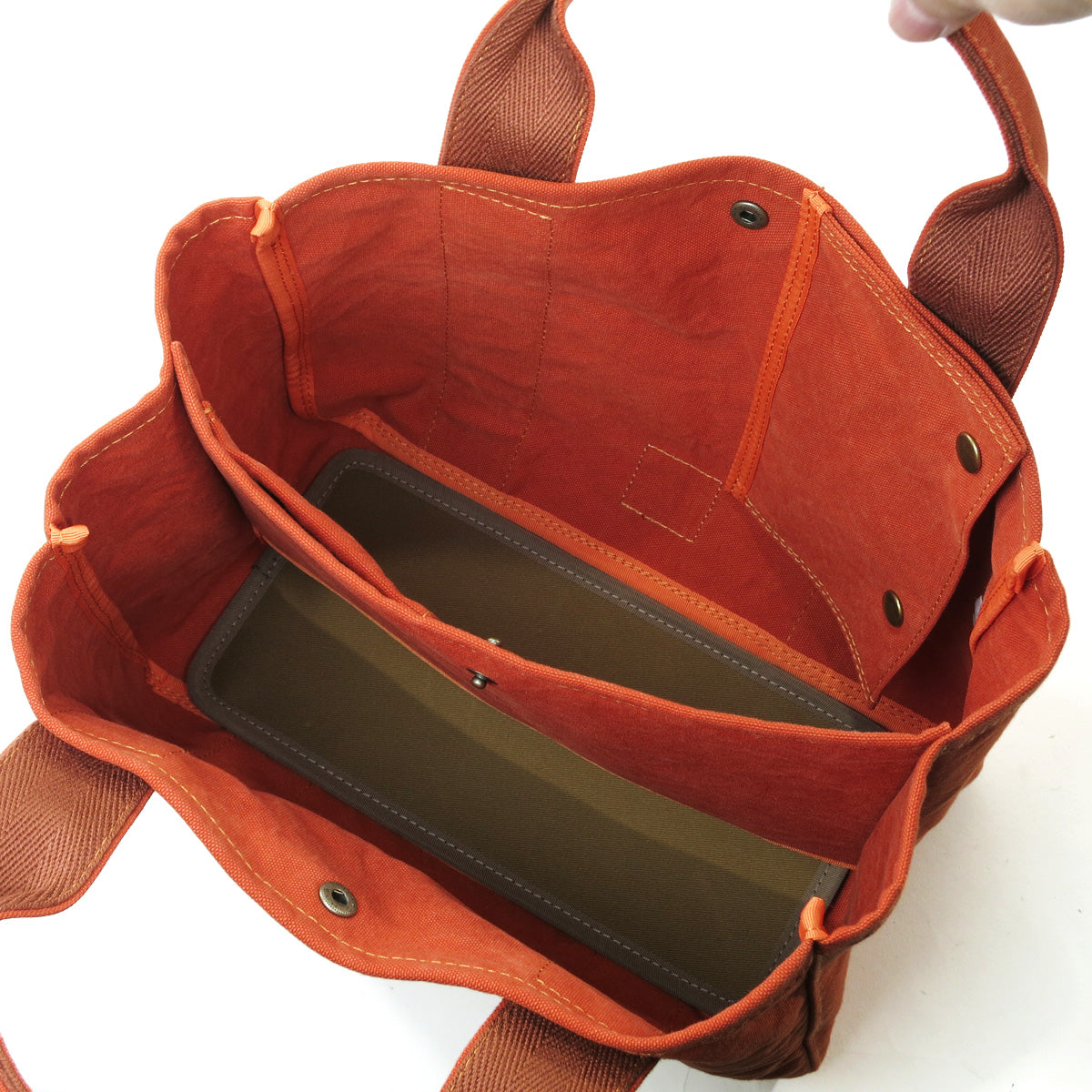
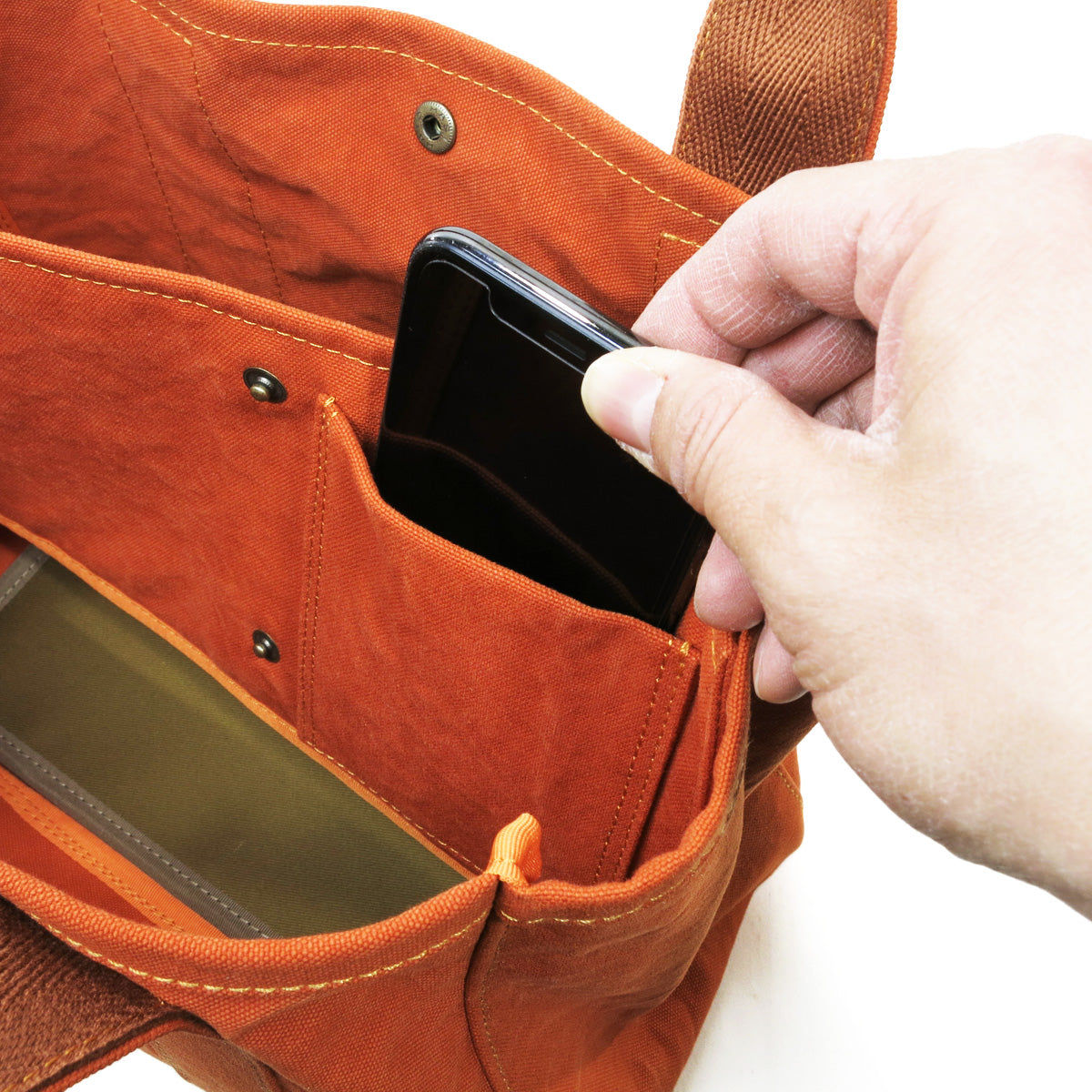
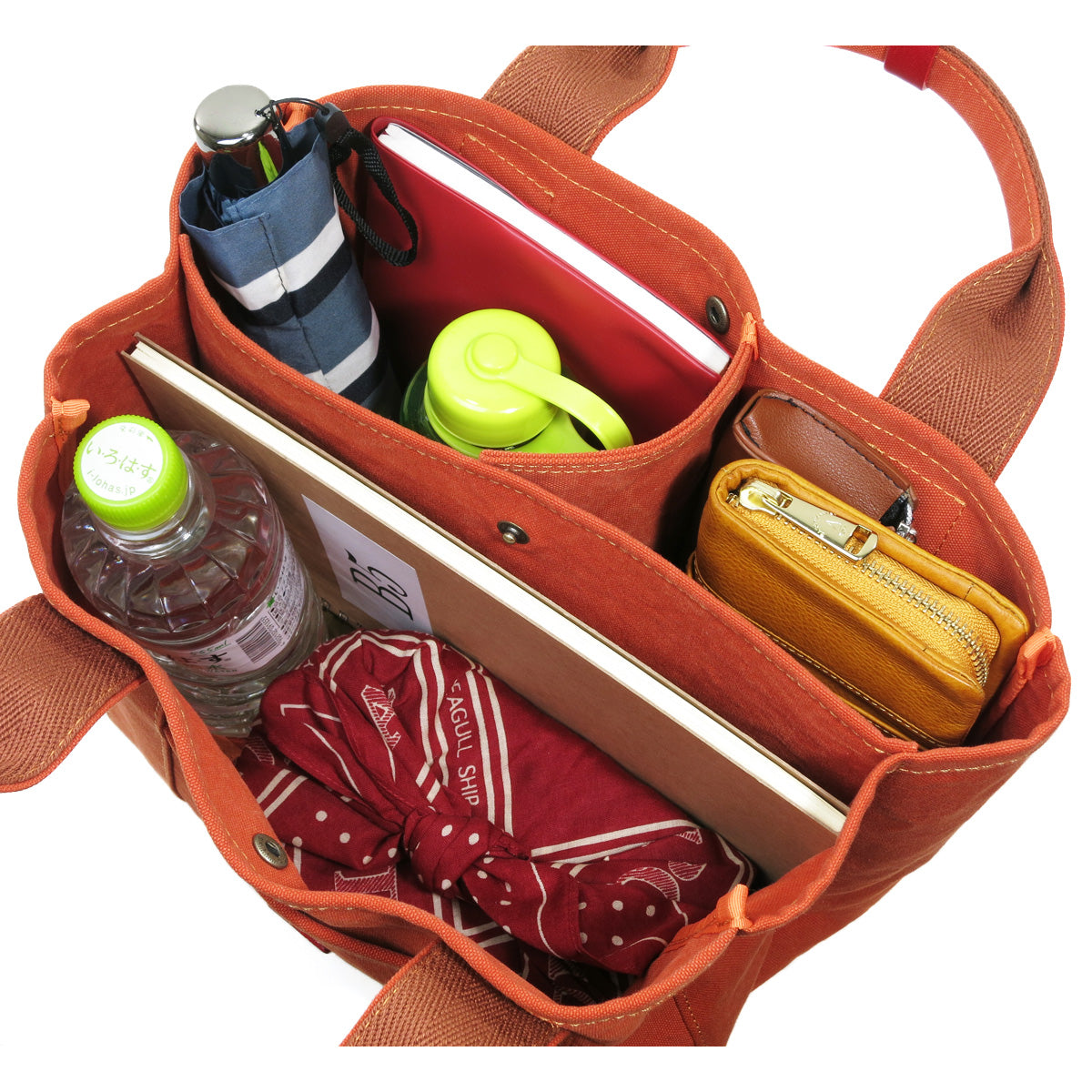
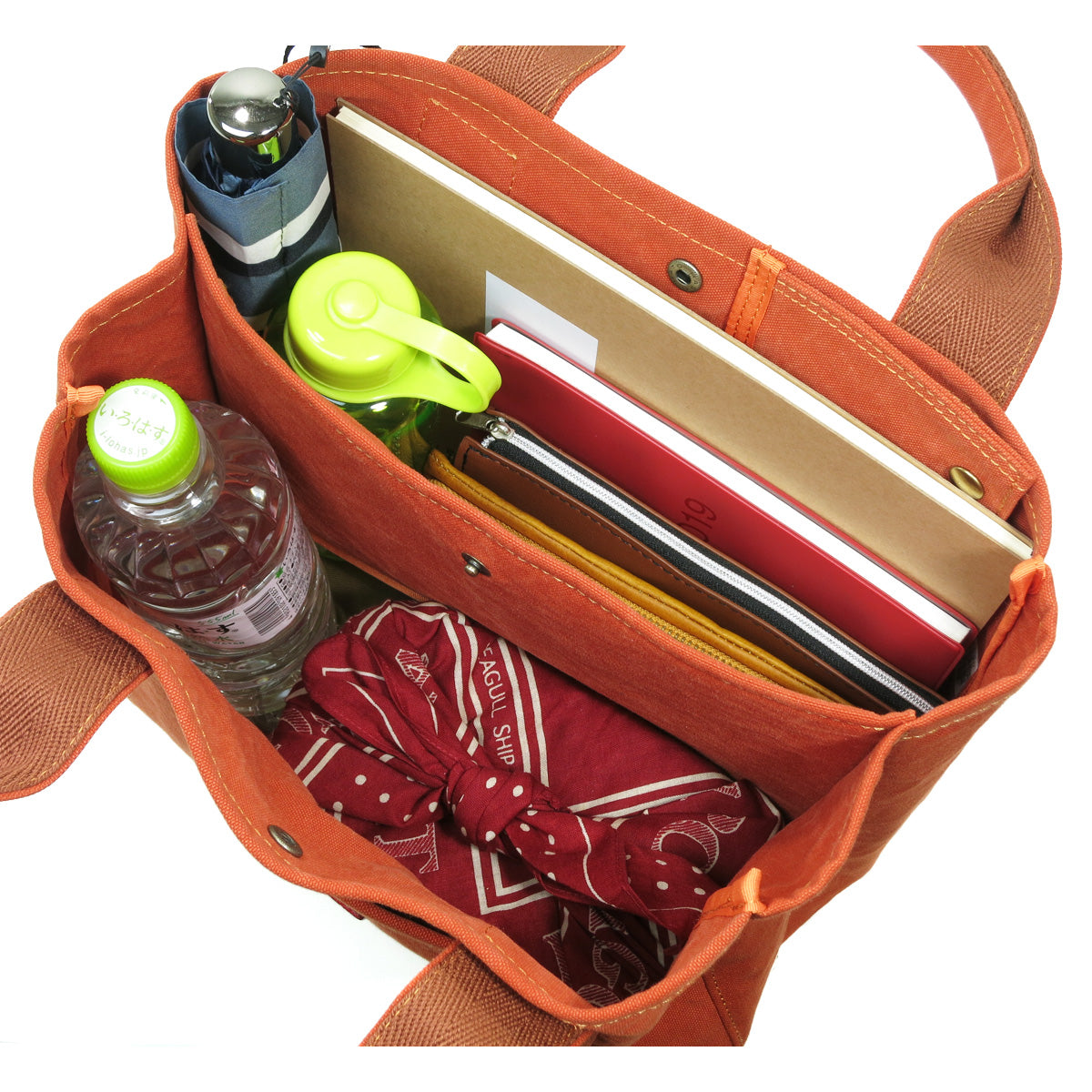
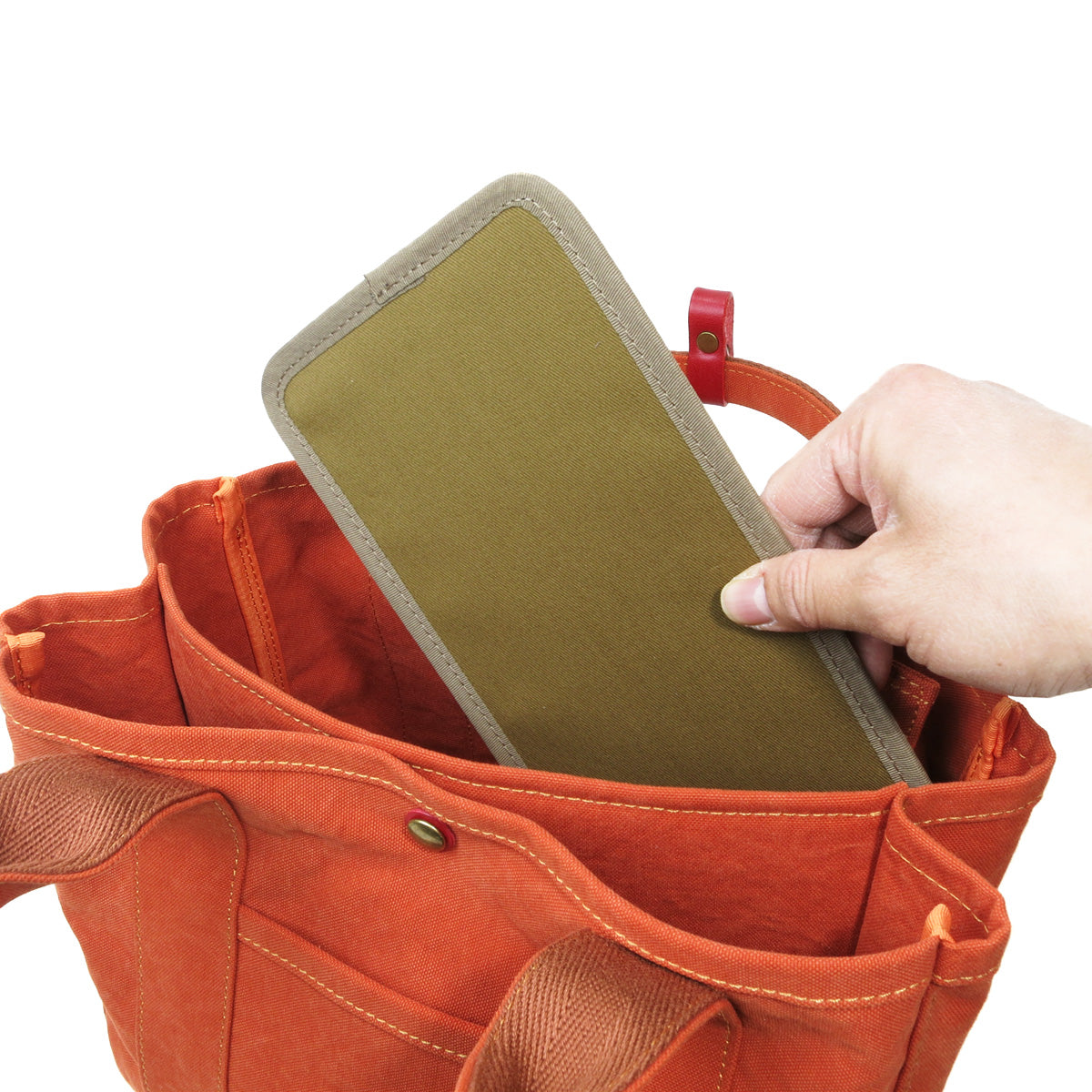
The interior features movable dividers, allowing you to reconfigure the layout to suit the type and quantity of your belongings. It also has an inner pocket convenient for storing your smartphone and a sturdy bottom board that prevents the bag from losing its shape even with a wide gusset, ensuring peace of mind for daily use.
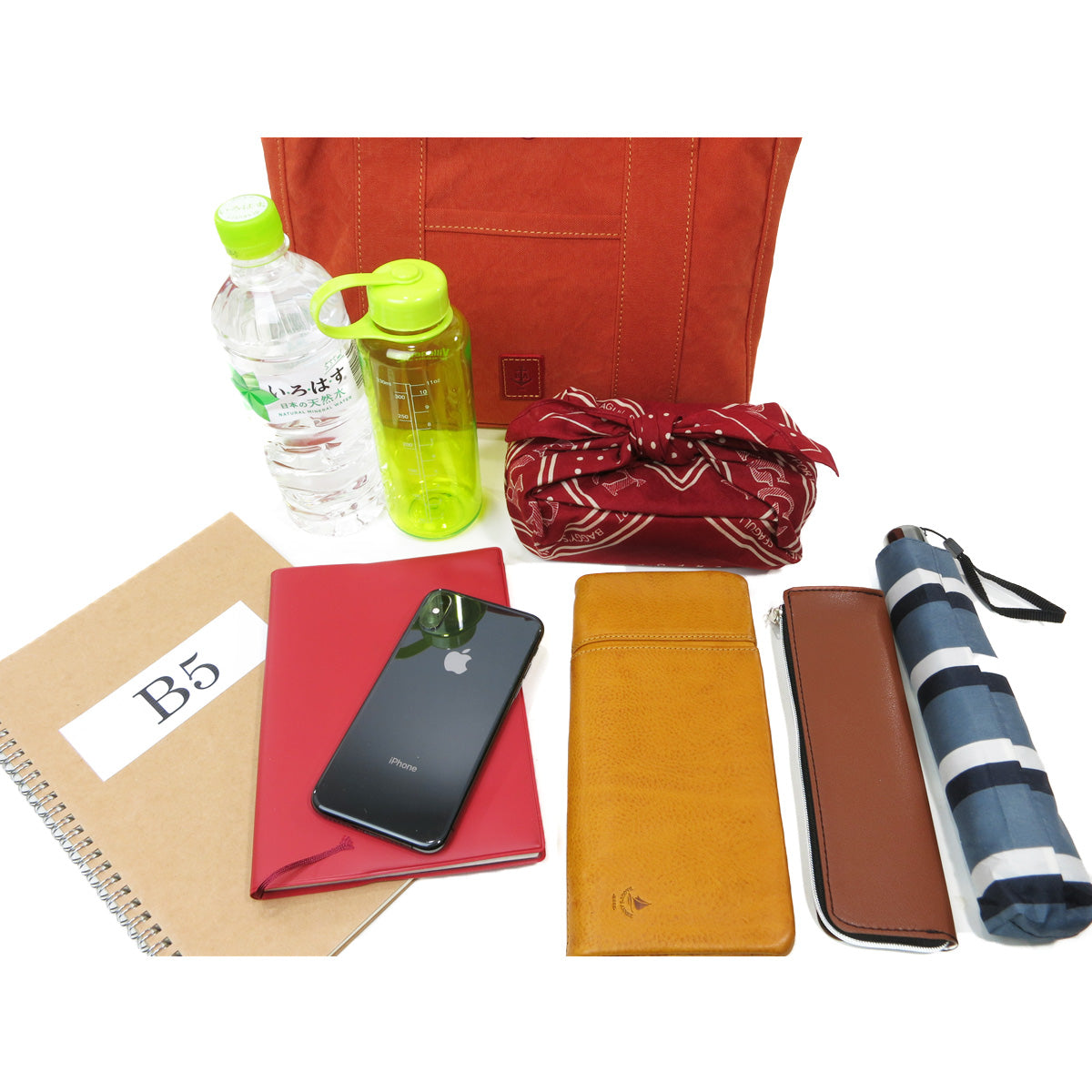
This bag is excellently sized to hold essential items such as a wallet, smartphone, planner, B5 notebook, lunchbox, folding umbrella, pen case, and a 500ml plastic bottle.
It's a versatile companion that will be useful for everything from daily errands to outings.
| Product Number | LGRN4020 |
| Specifications | ■ Size (approximate) H 22cm x W 29cm x D 13.5cm ■ Weight 390g ■ Main opening 29.5cm ■ Pockets ○ Outer pocket H 14.5cm x W 11cm (front open pocket) ○ Inner pocket: 1 ■ Handle Width: 2cm Length: 29.5cm Height: 9.5cm |
| Material | 18oz Army Duck Bio-Washed |
| Country of Origin | Made in Japan |
We strive to represent the colors and textures of our products as close to the actual products as possible, but the colors may appear different from the actual product depending on the lighting conditions during photography and the settings of your monitor .
Please note that there may be slight differences in the dyeing finish depending on the production lot, and the color may differ from the image shown.
- 本製品は帆布などの天然素材を使用しているため、生地の織りムラやネップ、シワ、色ムラなど、素材特有の自然な表情が現れる場合があります。素材の特性としてご了承ください。
- 水濡れや汗、摩擦により色落ちをしたり、衣類に色が移ることがあります。雨の日や暑い日のご使用、明るい色味の衣類でのご使用にはご注意ください。
- 革や生地には、素材や染料・加工などに由来する特有のにおいがございます。においの感じ方には個人差がございますので、革・生地特有のにおいが気になる方は、あらかじめご了承のうえご購入ください。
- If it gets wet, immediately wipe off the moisture with a dry cloth and dry it in the shade.
- Avoid high temperatures and humidity and store in a well-ventilated place.
- If you are concerned about stains, avoid washing the entire item as it is machine washable. Instead, gently pat the area with a soft cloth or sponge using lukewarm water and a mild detergent. Be careful with the leather parts.
Nationwide flat rate of 500 yen (tax included)
Free shipping for orders totaling 3,900 yen or more
This product is in stock at multiple stores.
Therefore, depending on when you place your order, the item may be out of stock.
If we are unable to secure stock, we will contact you by email after you place your order.
Choose options

ALBERTON
ALBERTON has a history of being adopted as the "US ARMY DUCK." It brings the military specifications of the past to modern times.

History and Origin
History and origins
ALBERTON was a large-scale spinning company that flourished in Maryland, USA, from the late 19th century to the early 20th century. As a central player in the US cotton market, it supplied duck fabric to the government and military, and during World War I it was widely adopted as "US ARMY DUCK."

Decline and inheritance of value
Decline and inheritance of value
Due to the Great Depression, the name of the town disappeared along with the company name in 1938, but the duck fabric business itself continued and expanded, and its quality and existence continue to hold value today as proof that it has supported the unknown behind-the-scenes development of the industry.

Revival in Japan and the present
Revival in Japan and the present
In 2016, the brand "ALBERTON®" was revived by a Japanese fabric producer, who produced duck fabric with selvedge stripes using old-fashioned power looms and the same manufacturing methods as those used at the time, breathing new value into the techniques and spirit of the past by bringing it back to life in the modern era.

